
Bottled water production: solve one problem
Water Bottle Conveyor Jams and Tipping: Locate the First Unstable Transfer
A queue of fallen bottles shows the outcome, not necessarily the cause. The first unstable bottle may appear at a transfer, during accumulation or only when the downstream machine restarts. Replacing the conveyor motor does not identify that boundary.
Record the first physical contact or loss of support from outside the guards. Keep bottle format and empty/wet/filled state constant, map the affected zone and compare stable running with restart. Separate the first jam from the later alarms it causes elsewhere on the line.
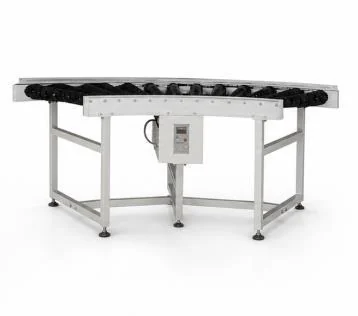
Identify the zone and the bottle state
Mark the actual transfer on a line sketch: machine discharge, base- or neck-supported movement, merge, curve, accumulation zone or packing infeed. Keep bottle drawing/lot, filled mass, surface moisture, label state and the downstream machine state with the observation. Dry empty and wet filled bottles are different test conditions.
Use a safe external view to identify the first tip, sideways contact or loss of base support. Compare its timestamp with upstream and downstream status. An alarm reported after bottles pile up does not prove the alarming machine caused the jam. Count initiating events and damaged/fallen bottles separately.
Illustrative count: 7 fallen bottles among 1,000 observed transfers is 0.7% for that defined observation window, not an acceptance limit. A single jam can damage several bottles. Record the first-event count, damaged count and actual downtime without double-counting simultaneous downstream stops.
Use the first failure pattern to narrow the interface
Do not assume a wider guide, faster chain or extra lubrication is always helpful. Compare the approved bottle state and the manufacturer's permitted configuration. Geometry measurements and physical inspections belong to qualified personnel after safe isolation.
| First observed failure | Evidence to compare | Corrective boundary |
|---|---|---|
| Tipping repeats at one discharge gap or transfer | Safe video, bottle-base support, direction and the actual transition drawing | Transfer support and elevation/interface review, not motor power alone |
| Only one bottle format or material lot wedges or scuffs | Approved drawings, samples, contact marks and bottle condition | Format parts, guide-contact compatibility and container variation |
| Stable running is acceptable but accumulation/restart creates a jam | Queue state, first motion, downstream availability and synchronized event record | Accumulation pressure and permitted speed/control coordination |
| Empty bottles fail but filled bottles transfer normally, or the reverse | Matched dry/wet, empty/filled and labelled states at the same zone | Actual support and handling mode for each state; no one-state qualification |
Prove the correction without unsafe jam clearing
Never reach into a moving conveyor, push trapped bottles through guards, bypass an interlock or remove a jam while hazardous energy remains. Follow the site's isolation and OEM procedures. This page provides observation and purchasing inputs, not rail dimensions, lubricant selection or control-programming instructions.
- 01
Retain the approved bottle revision, affected samples, original recipe and zone sketch. Agree stability, appearance and damage criteria before any trial.
- 02
Compare matched stable-run and stop/restart observations from safe positions. Establish the first failing interface before changing several machines.
- 03
Have qualified personnel inspect the suspected transition or format parts after isolation. Document one permitted change and the components left unchanged.
- 04
Retest the same bottle states and required format range, including the agreed accumulation/restart case. Count initiating jams and affected bottles separately.
- 05
Check downstream transfer, inspection/reject handling and the site's product disposition. Approve the connected interface, not just an isolated conveyor demonstration.
Specify the transfer problem in the equipment request
A repeatable physical handoff fault may need a revised transition or format part. A bottle-lot issue needs container confirmation before machinery purchase. A restart-only problem needs the actual accumulation and control boundary reviewed. Longer conveyor space cannot cure a continuous downstream capacity deficit.
Send Allot Tech the first-event evidence and request a scope that identifies retained/changed interfaces, bottle states, format parts, qualified control responsibility and connected acceptance tests. Confirm layout, hygiene, safety, compatibility and supply boundaries in writing; no universal retrofit is assumed.
- Machine identities and a labelled transfer/zone sketch
- Approved bottle drawings, lots, samples and damage marks
- Empty/filled mass, surface moisture and label state
- External video and first-event timestamps with line status
- Stable/restart event counts, affected bottles and non-overlapping downtime
- Proposed scope, retained parts, acceptance criteria and responsible parties
Questions buyers ask
Will widening guide rails stop water bottles jamming?
Not as a general fix. First identify the actual contact, bottle variation and permitted support arrangement. Wider guiding may leave a bottle less controlled, while tighter contact may wedge or scuff it. A qualified review and matched retest must establish the correct format-specific configuration.
Can adding conveyor length eliminate repeated bottle jams?
Only if the diagnosed interruption genuinely requires a suitable buffer and the connected configuration is validated. Extra length does not repair a bad transfer, a bottle-format mismatch or a sustained downstream capacity shortfall. Define the first event before specifying more accumulation.
Related troubleshooting guides
Water filling machine low output
Water filling machine low output →Water bottle shrink-pack problems
Water bottle shrink-pack problems →Cap leaks after capping
Cap leaks after capping →Wrinkled or skewed bottle labels
Wrinkled or skewed bottle labels →Uneven fill levels and underfill
Uneven fill levels and underfill →Ask Allot Tech to review the evidence
Send your machine identification, package drawing and timed observations. State what is unknown so the proposed scope follows the actual problem.