
Machinery stage 04 · Primary bottling
CORE MACHINERY
Water Rinsing, Filling and Capping Machinery: XGF Model Guide
Compare the XGF still-water monoblock family using catalog model data, then define the bottle, closure and connected equipment for your project. The 3-in-1 machine combines rinsing, filling and capping; the final offer identifies its confirmed configuration and the equipment supplied separately.
Jump to quotation data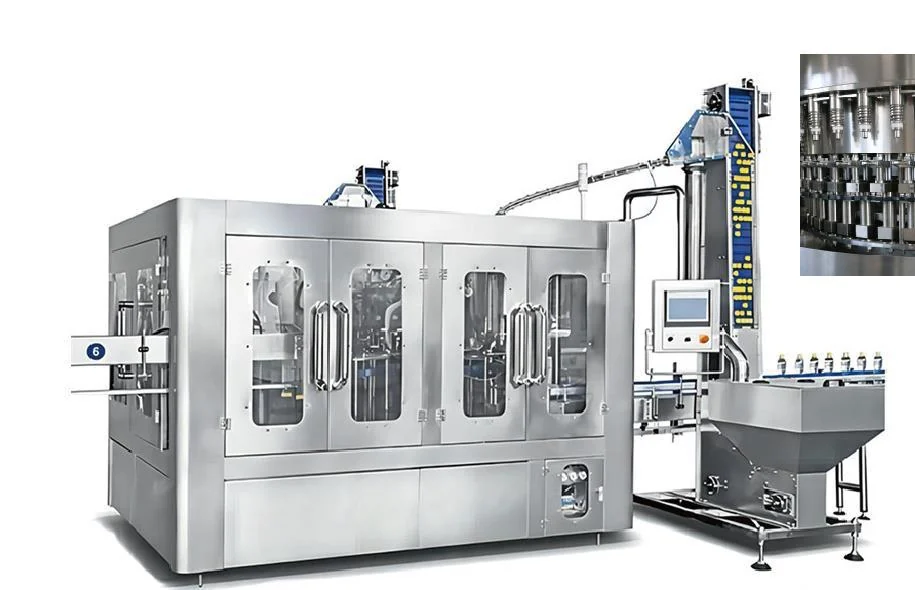
Solve the production problem before buying more machinery
Use a measured symptom and a controlled retest to decide whether the next action is material correction, maintenance, interface work or a machine change.
Fewer good bottles than expected?
Separate elapsed-time output from running speed, find the first stop and test one cause before deciding on a replacement filler.
Water filling machine low outputWater leaks after capping?
Compare leakage by head, cap lot, neck condition and test age. Keep sealing evidence separate from removal torque before specifying capper work.
Cap leaks after cappingUneven fill levels or suspected underfill?
Define height, net mass or volume as the agreed result. Compare valve groups, bottle lots and startup phases before changing the filler or inspection threshold.
Uneven fill levels and underfill01 · QUICK ANSWER
What this machinery does and when it belongs
For a still-water PET project, shortlist the monoblock against your bottle and closure drawings, required good-bottle output and cleaning scope. Confirm how filling stops, which parts change between formats, and where rejected bottles go. A 3-in-1 label alone does not define the complete supply package.
- Production stage
- After treated-water and empty-bottle preparation, before labeling and packing
- Selection status
- CORE MACHINERY
BUYER DECISION WORKBENCH
XGF model comparison: catalog reference data
Compare nine reference models from the Allot Tech Beverage Bottling Catalog 2026, page 10. The capacity column is based on 500 ml bottles. Page 9 describes normal-pressure filling for the XGF still-water platform. These are catalog values, not an independently measured performance test or a statement of current availability.
| Reference model | Catalog capacity at 500 ml (BPH) | Machine L × W × H (mm) | Catalog weight (kg) | Catalog power (kW) |
|---|---|---|---|---|
| XGF14-12-5 | 6,000 | 2,360 × 1,770 × 2,700 | 2,800 | 2.42 |
| XGF16-16-5 | 8,000 | 2,760 × 2,060 × 2,700 | 3,800 | 3.12 |
| XGF24-24-8 | 13,000 | 2,800 × 2,230 × 2,700 | 4,800 | 3.92 |
| XGF32-32-8 | 16,000 | 4,215 × 2,960 × 2,700 | 5,800 | 4.92 |
| XGF40-40-12 | 18,000 | 4,360 × 3,300 × 2,700 | 6,800 | 7.30 |
| XGF50-50-15 | 24,000 | 5,900 × 4,123 × 2,700 | 8,600 | 7.87 |
| XGF60-60-15 | 30,000 | 5,770 × 5,288 × 2,700 | 10,800 | 11.00 |
| XGF72-72-18 | 36,000 | 6,540 × 4,900 × 2,700 | 12,800 | 11.40 |
| XGF80-80-18 | 42,000 | 7,800 × 6,380 × 2,700 | 15,000 | 15.37 |
Source: Allot Tech Beverage Bottling Catalog 2026, pages 9-10. Reference container envelope: 500-2,000 ml, height 170-320 mm and diameter 50-115 mm. Confirm neck, cap, bottle geometry, machine revision and every SKU. Machine dimensions exclude a defined installation/service envelope; the catalog power field is not a complete connected-load schedule or measured consumption. Output at another bottle volume must be confirmed, not scaled from 500 ml.
BUYER DECISION WORKBENCH
Turn a catalog shortlist into a confirmed configuration
A model reference starts the discussion. A comparable offer then ties that reference to one controlled bottle and closure set, the required output and the actual machines on either side. Retain the source model designation when asking for clarification so a revised configuration is not mistaken for an identical machine.
| Use the catalog for | Confirm in the offer | Why it changes the decision |
|---|---|---|
| Reference capacity and model family | Per-SKU good-bottle rate, product conditions, trial duration and rejection accounting | The same bottle volume can have different shape, neck and handling requirements. |
| Machine dimensions and weight | Current general arrangement, service access, lifting plan and site-specific support review | The base machine is only part of the space and installation requirement. |
| Power entry | Rated connected-load list, voltage/frequency and separate utility consumers | A single catalog figure does not define compressors, pumps, treatment or complete-line demand. |
| Platform description | Filling endpoint, product-contact scope, component schedule, cap path and cleaning interfaces | Named platform features do not confirm every component on a later offer. |
| Reference container envelope | Drawings and samples, neck/cap pair, change parts and witnessed format trials | A dimensional envelope does not approve all shapes or all combinations within it. |
BUYER DECISION WORKBENCH
Separate a monoblock offer from a complete production promise
The monoblock connects bottle rinsing, filling and closure application. Whether the rest of the line supplies and accepts containers at the required rate is a separate confirmation. Ask for the output basis of every bottle size, not one headline BPH value.
| Offer detail | Acceptable evidence | Keep open when |
|---|---|---|
| Bottle and neck range | Controlled drawings, samples and format-specific parts | Only nominal bottle volume is supplied |
| Closure application | Approved closure pair and verification method | A cap name replaces the drawing |
| Product and sanitation | Agreed product path, cleaning scope and test conditions | Sanitation responsibility is unspecified |
| Connected output | FAT protocol and upstream/downstream assumptions | Speed is stated without a bottle and duration basis |
BUYER DECISION WORKBENCH
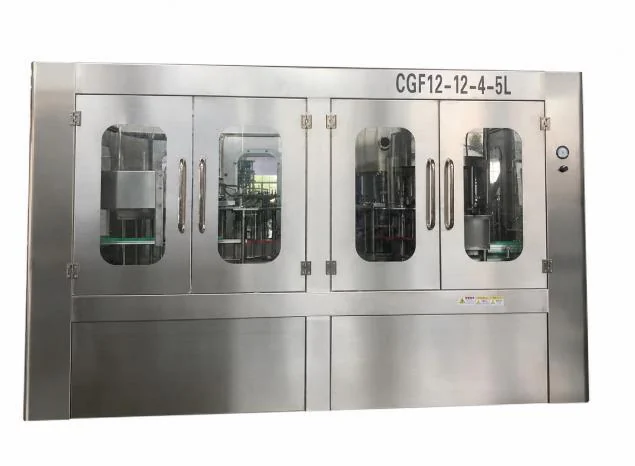
What belongs in a rinsing, filling and capping quotation?
Use the machine's three functions as separate purchase blocks. This makes a low headline price easier to compare with a more complete offer.
| Purchase block | Name in the proposed supply | Question that changes the scope |
|---|---|---|
| Bottle handling and rinsing | Infeed, grippers, rinse circuit, drainage and discharge transfers | Which approved bottles can be handled, and who supplies the rinse medium and return/drain connections? |
| Filling system | Tank or product feed, valves, fill-control method, contact materials and cleaning connections | Is acceptance based on fill level, volume or mass, and how is it checked on the actual bottle? |
| Cap application | Capper heads, bottle support and closure-specific parts | Are bulk-cap loading, sorting, elevation and chute delivery included or separate? |
| Changeover | Parts, adjustments, recipes and identification for each agreed SKU | Which items are supplied now, and which require a later conversion? |
| Controls and inspection | Line signals, selected checks, reject hardware and records | Does a detected defect cause an alarm, a line stop or verified removal? |
BUYER DECISION WORKBENCH
Resolve the fill, closure and inspection decisions before ordering
These three decisions travel together: an accepted bottle must have the agreed fill, an approved applied closure and a defined route when a check fails. Treat a format change as a connected-machine review, not just a volume setting.
- Ask what physically stops filling and which measurement controls the result; a gravity-fed product path can still use different fill-control arrangements.
- Approve the cap and neck pair, then distinguish capping-head application measurements from finished-bottle removal-torque tests.
- Separate cap presence, cap position and leak or seal testing; do not buy one as if it proves all three.
- Agree the bottle, water, output and duration basis for the machine trial, including how nonconforming bottles are counted.
- Keep carbonated, hot-fill and aseptic requirements outside this still-water proposal unless a separate, documented configuration is offered.
02 · WHERE IT FITS
Follow the actual upstream and downstream product state
Treated water, stable empty bottles, correctly oriented caps and confirmed utilities
Rinsing, Filling and Capping Machinery
Closed bottles at the agreed discharge elevation and line-control state
03 · BUYER DATA REQUIRED
Do not request a responsible selection without these inputs
- Bottle drawing, volume range, neck finish and physical samples
- Cap drawing, liner if used, application and torque requirements
- Water characteristics and hygienic/product-contact requirements
- Output basis and expected format-change pattern
- Infeed/outfeed elevations, directions and connected equipment
- Power, water pressure, drainage and compressed-air conditions
- Preferred components, document language and inspection plan
04 · MACHINE FUNCTIONS
Describe the work, not a marketing adjective
- 01
Receive bottles through the matched infeed and neck-handling arrangement.
- 02
Rinse or otherwise prepare the bottle according to the confirmed process.
- 03
Meter still water through the selected filling system.
- 04
Feed and apply the confirmed cap without uncontrolled damage.
- 05
Discharge closed bottles while reporting machine state and faults to the line.
05 · MAIN CONFIGURATION OPTIONS
Choose an option only when its condition applies
PROJECT-SPECIFIC
Bottle and changeover range
Neck finish, bottle geometry and format count determine handling parts, setup method and what must be trialed.
PROJECT-SPECIFIC
Hygienic and contact scope
Product-contact materials, enclosure, cleaning access, piping, tank and sanitation details must be named in the proposal.
PROJECT-SPECIFIC
Controls and inspection
Component preferences, cap checks, level checks, reject logic and data exchange are project options rather than assumed inclusions.
06 · COMPATIBILITY REQUIREMENTS
Eight interfaces must agree at the machine boundary
A supplier response should point to the controlling drawing, schedule or test for each row.
| Interface | Confirmation required | Evidence state |
|---|---|---|
| Mechanical | Infeed/outfeed elevations, conveyor transitions, frame access, drains and maintenance clearance. | Confirm in drawing, schedule or test record |
| Container | Bottle neck, diameter, height, rigidity, base stability, cap geometry and change parts. | Confirm in drawing, schedule or test record |
| Product | Treated-water supply, contact materials, filling method, temperature and hygienic boundary. | Confirm in drawing, schedule or test record |
| Electrical | Voltage, frequency, cabinet conditions, component basis and protection. | Confirm in drawing, schedule or test record |
| Control signal | Bottle demand, water permissive, cap low-level, downstream block, alarms and line emergency stop. | Confirm in drawing, schedule or test record |
| Utility | Treated water, rinsing medium, compressed air, power, drainage and cleaning services. | Confirm in drawing, schedule or test record |
| Layout | Machine orientation, operator side, cap route, service platform and connection to adjacent machines. | Confirm in drawing, schedule or test record |
| Operator | Format setup, sanitation, cap loading, inspection response, cleaning and safe intervention. | Confirm in drawing, schedule or test record |
07 · SELECTION TRADE-OFFS
Record what the buyer is prioritizing
Compact monoblock footprint
Trade against maintenance access; record the buyer priority and evidence.
Broader bottle range
Trade against simpler and more repeatable changeover; record the buyer priority and evidence.
Higher nameplate speed
Trade against balanced connected-line output; record the buyer priority and evidence.
Additional automatic inspection
Trade against cost, controls and reject handling; record the buyer priority and evidence.
08 · COMMON QUOTATION OMISSIONS
Check what may sit outside the headline machine price
- Cap elevator, sorter, chute and cap-treatment scope
- Air conveyor, discharge conveyor and accumulation
- Product buffer tank, pump and interconnecting sanitary pipework
- Change parts for every bottle and cap format
- Bottle dryer, coder, labeler and downstream inspection
- Trial bottles, caps, water and agreed FAT consumables
09 · FAT INSPECTION POINTS
Trace the test back to approved project documents
- 01
Verify identity, approved drawings, contact-material records and change-part list.
- 02
Run dry functions, guards, safety circuits, lubrication and alarm logic.
- 03
Perform an agreed wet run with confirmed bottle and cap samples.
- 04
Inspect bottle handling, rinse behavior, fill condition, cap application and discharge stability.
- 05
Record documents, spare parts, open items and the remaining site-performance tests.
10 · MAINTENANCE AND SPARE PARTS
Prepare categories before shipment; confirm exact parts from the final configuration
- Filling-valve and product-path seals
- Bottle grippers, neck guides and format parts
- Capping-head service items and cap-chute wear parts
- Pneumatic seals, sensors and common electrical spares
- Sanitary gaskets, spray nozzles and confirmed consumables
11 · NOT SUITABLE FOR
Reject the wrong application before discussing price
- Carbonated, hot-fill or other products not covered by the confirmed still-water process
- Unapproved bottle or cap formats treated as interchangeable
- Replacement projects with unknown elevations, signals, utilities or physical access
12 · INFORMATION NEEDED FOR QUOTATION
Send a machine-level request that can be answered
- Bottle and cap drawings plus samples
- Water and hygiene requirements
- Required output basis
- Format list and changeover expectation
- Upstream/downstream equipment details
- Utilities, layout and operator side
- FAT, document, spare-part and service expectations
Technical descriptions are selection guidance. Final machine, capacity, material, component, interface, utility and service details must be confirmed in the project proposal.
Content reviewed:
NEXT PURCHASING ACTION
Match this machinery to the whole connected line.
Send the project-specific buyer data, adjacent machine details and open interfaces.