
Machinery stage 03 · Empty-bottle transfer
CORE CONNECTION EQUIPMENT
Bottle Handling Machinery That Protects Line Stability
Bottle handling is the physical and control bridge between bottle supply and the filler. The right choice depends on whether bottles arrive online from a blower, from bulk storage or from manual loading, and whether each bottle remains stable through elevation, curves, accumulation and changeover.
Jump to quotation data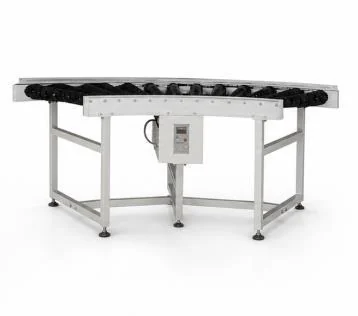
Solve the production problem before buying more machinery
Use a measured symptom and a controlled retest to decide whether the next action is material correction, maintenance, interface work or a machine change.
Bottles jam or tip during transfer?
Find the first loss of support or contact. Compare bottle states, steady running and accumulation restart before requesting more conveyor or new format parts.
Conveyor jams and tipping01 · QUICK ANSWER
What this machinery does and when it belongs
Bottle handling receives empty bottles, orients them where necessary and meters them into the next machine. An unscrambler may be unnecessary on a directly coupled blower-to-filler line, while stable transfer and accumulation remain necessary in every configuration.
- Production stage
- Between bottle manufacture or storage and the rinsing-filling-capping section
- Selection status
- CORE CONNECTION EQUIPMENT
BUYER DECISION WORKBENCH
Choose bottle-feed equipment from the way empty bottles arrive
The bottle source determines the first machine in this stage. A directly connected blower needs a controlled transfer; loose purchased bottles normally need orientation before the filler; manual loading needs a defined loading and metering point. These are different purchase scopes even when they end at the same filler infeed.
| Empty-bottle source | Equipment to evaluate | Scope boundary to write |
|---|---|---|
| Online PET blowing | Matched discharge transfer and neck-supported or otherwise approved conveyor | Blower discharge state, elevation, bottle support, stop/restart signals and any backup route |
| Purchased bottles in bulk | Bottle receiving or dump arrangement, unscrambler and metering conveyor | Supply container, operator loading, orientation method, cleaning boundary and filler-feed buffer |
| Controlled manual loading | Loading table or infeed conveyor with bottle spacing and safe access | Expected loading task, bottle presentation, line speed basis and response to a blocked filler |
| Returned large containers | Dedicated return inspection, washing and large-container handling path | Keep this route separate from one-way small PET handling and confirm the actual container sample |
- Send one drawing and physical sample for every bottle format that must run.
- Mark the bottle source for normal production and for any backup operating mode.
- State which supplier owns every bridge, fan, guide, support, sensor and field signal.
- Ask for a production-representative transfer trial; a conveyor photograph does not prove bottle stability.
The catalog conveyor shown on this page is representative transfer equipment. It does not establish the required unscrambler, support method, conveyor length, accumulation or output for a project.
02 · WHERE IT FITS
Follow the actual upstream and downstream product state
Online blower discharge, bulk empty bottles or controlled manual bottle loading
Bottle Handling Machinery
Oriented, stable and correctly spaced bottles at the filler infeed
03 · BUYER DATA REQUIRED
Do not request a responsible selection without these inputs
- Bottle drawings, samples, neck finish and empty-bottle stability
- Bottle source: online blower, bags, bins, pallets or manual feed
- Format range and frequency of changeover
- Upstream and downstream speed basis
- Infeed/outfeed elevations and line direction
- Required accumulation and recovery behavior
- Available air, power and cleaning method
04 · MACHINE FUNCTIONS
Describe the work, not a marketing adjective
- 01
Orient randomly supplied bottles when an unscrambler is part of the scope.
- 02
Transfer lightweight empty PET bottles by the neck or supported body as confirmed.
- 03
Meter bottle flow to prevent uncontrolled surges at the filler.
- 04
Provide accumulation or controlled stop logic between connected machines.
- 05
Permit format change without creating bottle scuffing, collapse or repeated jams.
05 · MAIN CONFIGURATION OPTIONS
Choose an option only when its condition applies
PROJECT-SPECIFIC
Unscrambling method
Bulk bottle orientation is selected from bottle geometry, surface sensitivity, labor plan and cleaning expectations.
PROJECT-SPECIFIC
Air or body conveyor
Neck-supported PET transfer differs from supported-body conveying in bottle suitability, guide setup and air demand.
PROJECT-SPECIFIC
Accumulation strategy
Buffer length and control zones should address realistic stops without treating conveyor length as a complete line-balance solution.
06 · COMPATIBILITY REQUIREMENTS
Eight interfaces must agree at the machine boundary
A supplier response should point to the controlling drawing, schedule or test for each row.
| Interface | Confirmation required | Evidence state |
|---|---|---|
| Mechanical | Conveyor height, width, support legs, curves, transitions, guides and connection plates. | Confirm in drawing, schedule or test record |
| Container | Bottle neck, shoulder, body geometry, empty-bottle rigidity and surface-mark sensitivity. | Confirm in drawing, schedule or test record |
| Product | Empty-bottle cleanliness and the allowed handling environment before rinsing and filling. | Confirm in drawing, schedule or test record |
| Electrical | Drive supply, fan supply, panel location and local isolators. | Confirm in drawing, schedule or test record |
| Control signal | Starved, blocked, run-permit, speed reference, fault and emergency-stop handshake. | Confirm in drawing, schedule or test record |
| Utility | Filtered conveying air where used, electrical power and cleaning access. | Confirm in drawing, schedule or test record |
| Layout | Elevation changes, curve radius, overhead clearance, access gates and accumulation length. | Confirm in drawing, schedule or test record |
| Operator | Loading, format adjustment, jam clearing, cleaning and safe restart tasks. | Confirm in drawing, schedule or test record |
07 · SELECTION TRADE-OFFS
Record what the buyer is prioritizing
Longer accumulation
Trade against floor space and bottle scuffing risk; record the buyer priority and evidence.
Automated unscrambling
Trade against manual loading and labor; record the buyer priority and evidence.
Neck handling
Trade against bottle-format constraints; record the buyer priority and evidence.
Tool-free guides
Trade against stronger fixed-format repeatability; record the buyer priority and evidence.
08 · COMMON QUOTATION OMISSIONS
Check what may sit outside the headline machine price
- Bottle dump or bulk-feed equipment
- Air fans, filters, ducts and silencers
- Connection bridges at supplier boundaries
- Guide and neck-rail change parts
- Access platforms, gates and site supports
- Cross-machine signals and field wiring
09 · FAT INSPECTION POINTS
Trace the test back to approved project documents
- 01
Run every agreed bottle format through the handling route.
- 02
Check transitions, guides, curves and infeed spacing for damage or repeated jams.
- 03
Simulate upstream and downstream stop conditions and recovery.
- 04
Verify guards, access gates, emergency stops and safe jam clearing.
- 05
Confirm change parts, drawings, signal list and site support scope.
10 · MAINTENANCE AND SPARE PARTS
Prepare categories before shipment; confirm exact parts from the final configuration
- Guide wear strips and conveyor chain or belt sections
- Fan filters and drive service items
- Sensors, reflectors and mounting hardware
- Format spacers, neck rails and confirmed change parts
- Common pneumatic and electrical control spares
11 · NOT SUITABLE FOR
Reject the wrong application before discussing price
- Unstable bottles whose geometry has not been trialed
- Mixed neck finishes without separate confirmed guide arrangements
- Layouts that ignore access, elevation and accumulation needs
12 · INFORMATION NEEDED FOR QUOTATION
Send a machine-level request that can be answered
- Bottle drawings and samples
- Bottle supply method
- Format list
- Connected machine layout and elevations
- Speed and stop/recovery basis
- Air and power conditions
- Required automation and access constraints
Technical descriptions are selection guidance. Final machine, capacity, material, component, interface, utility and service details must be confirmed in the project proposal.
Content reviewed:
NEXT PURCHASING ACTION
Match this machinery to the whole connected line.
Send the project-specific buyer data, adjacent machine details and open interfaces.