
Capacity comparison · demand-led machinery choice
Choose Between 3000, 5000 and 10000 BPH Water Bottling Lines
A capacity label is only meaningful when every supplier uses the same bottle, fill volume and operating basis. A 3000, 5000 or 10000 BPH line can be appropriate for different demand patterns, labor plans and utility limits.

DIRECT ANSWER
What the buyer should decide
Convert monthly demand into saleable bottles by SKU, then model scheduled hours, cleaning, changeovers, rejects and peak periods. Compare treatment, blowing, filling, labeling and packing on that same basis before choosing the line class.
| Decision field | Confirm | Why it changes the purchase |
|---|---|---|
| 3000 BPH class | Lower scheduled demand, phased automation or more manual handling | Verify labor and future interface allowances |
| 5000 BPH class | Moderate demand with connected automatic core machinery | Verify utilities and downstream balance |
| 10000 BPH class | Higher sustained demand and stronger automation need | Verify accumulation, packing and site readiness |
BUYER DECISION WORKBENCH
A 3,000, 5,000 or 10,000 BPH target is not a model name
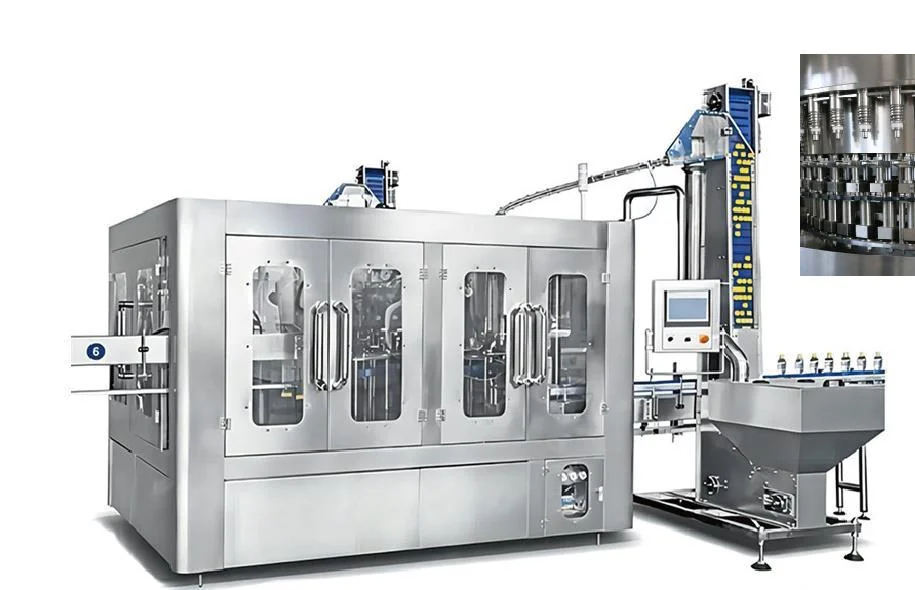
Use capacity classes to describe your demand, then review actual machine references. The XGF catalog table begins at 6,000 BPH and contains no 3,000, 5,000 or 10,000 BPH row. Do not rename a model, interpolate a missing catalog rating or assume that buying the next larger number guarantees the target.
| Illustrative buyer target | What the catalog actually says | Question for the configuration review |
|---|---|---|
| 3,000 good bottles/hour | The lowest listed XGF reference is XGF14-12-5 at 6,000 BPH on a 500 ml basis. | Is this machine appropriate at the required operating point, or should another verified arrangement be quoted? |
| 5,000 good bottles/hour | 6,000 BPH is a reference machine rating, not a guarantee of 5,000 saleable bottles/hour in the connected line. | What bottle, operating-time, speed and rejection basis produces the requested good output? |
| 10,000 good bottles/hour | Adjacent listed references are 8,000 BPH and 13,000 BPH; there is no listed 10,000 BPH XGF row. | Which configuration and format-specific test will demonstrate the target with the proposed downstream equipment? |
Arithmetic example only: 13,000 reference BPH × eight scheduled hours × an explicitly assumed combined factor of 0.75 = 78,000 illustrative good bottles, below an 80,000-bottle shift target. This does not estimate the real XGF24-24-8 result or recommend 0.75. Apply a loss only once and confirm the actual operating basis.
BUYER DECISION WORKBENCH
What 3,000, 5,000 and 10,000 BPH mean over one shift
Illustrative planning case: one bottle format, eight scheduled hours and a combined operating factor of 0.75. The factor already includes time loss, speed loss and rejected output, so those losses must not be deducted a second time. These calculations are not equipment ratings.
| Reference rate | Calculation | Illustrative good bottles / shift | At 500 ml: net product water / shift |
|---|---|---|---|
| 3,000 BPH | 3,000 × 8 × 0.75 | 18,000 | 9,000 L |
| 5,000 BPH | 5,000 × 8 × 0.75 | 30,000 | 15,000 L |
| 10,000 BPH | 10,000 × 8 × 0.75 | 60,000 | 30,000 L |
For a target of 40,000 good bottles in that same shift, the reference-rate requirement is 40,000 ÷ (8 × 0.75) = 6,666.7 BPH. A 5,000 BPH proposal does not meet that illustrative target; a higher-capacity proposal still needs format-specific line verification. Net product water excludes treatment reject water, rinsing, cleaning and other process losses.
BUYER DECISION WORKBENCH
Check bottles per hour against packs per minute
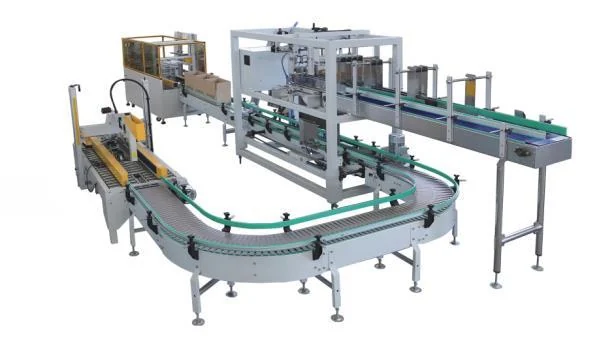
A packer may be quoted in packs per minute while the filler is quoted in bottles per hour. At six bottles per pack, divide the bottle rate by six and then by sixty. Confirm the final machine against the actual pack and material rather than rounding a required rate down.
| Bottle rate | Six-bottle packs / minute | Net product at 500 ml / hour |
|---|---|---|
| 3,000 BPH | 8.33 | 1,500 L |
| 5,000 BPH | 13.89 | 2,500 L |
| 10,000 BPH | 27.78 | 5,000 L |
These are steady-running unit conversions before losses, not minimum equipment specifications or water-treatment sizing. Other pack sizes, replenishment stops, rejection and accumulation change the practical requirement.
REQUIRED INPUTS
Prepare the evidence before selection
Missing fields should remain marked as open rather than converted into assumptions.
- Bottle sizes and SKU mix
- Daily, monthly and peak demand
- Shifts and productive hours
- Changeover and cleaning frequency
- Expected saleable yield
- Available power, air, cooling and water
- Expansion horizon
TRADE-OFFS
Make the choice visible
Every option changes the machinery, operating work or project boundary.
Smaller first phase
Can reduce initial machinery scope but may create an early upgrade and new interfaces.
Larger capacity reserve
Adds headroom while increasing utilities, footprint and maintenance obligations.
One fast line
Simplifies the flow but can concentrate production risk in one connected train.
PURCHASING RISKS
Do not let these gaps hide in the quotation
Carry every unresolved item into clarification and contract documents.
- Comparing BPH on different bottle sizes
- Sizing from annual demand without peak periods
- Ignoring packer and blower limitations
- Treating rated BPH as guaranteed saleable output
WORK SEQUENCE
Move from data to a controlled next action
- 01
Build demand by SKU.
- 02
Set the operating calendar.
- 03
Calculate the required effective rate.
- 04
Compare every connected stage.
- 05
Test the peak and expansion cases.
BUYER QUESTIONS
Answers to common bottled-water machinery searches
Use these answers to prepare the next supplier question; final configuration remains project-specific.
Is a 5000 BPH water bottling line always better than a 3000 BPH line?
No. The better class is the one that meets saleable demand with suitable operating hours, utilities, labor, pack capacity and expansion headroom.
Does 10000 BPH mean 10000 saleable bottles every hour?
Not automatically. Bottle format, stops, changeovers, rejects and connected-machine limits must be included in the effective-output model.
Representative machinery views
Compare the machinery form before selecting the project scope
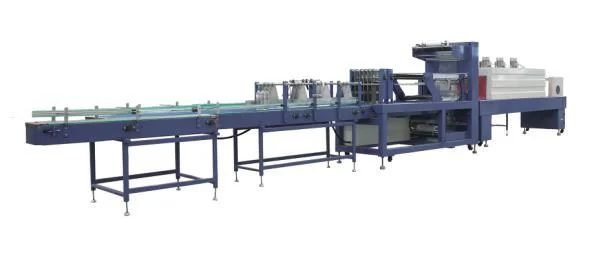
Technical descriptions are selection guidance. Final machine, capacity, material, component, interface, utility and service details must be confirmed in the project proposal.
Content reviewed:
NEXT PURCHASING ACTION
Choose capacity from demand, not a headline number.
Send bottle sizes, demand and operating hours for a transparent capacity comparison.