
Bottled water production: solve one problem
Missing or Extra Bottles in Water Packs: Verify the Physical Count at Each Handoff
A finished pack with the wrong count may start with an infeed gap, lose a bottle during transfer or only appear wrong to an inspection system. A production counter measures its configured events; it does not necessarily prove how many bottles are inside each pack.
Hold suspect packs under the quality procedure. Define the approved count and pattern, then compare identified groups before formation, after transfer and in the finished pack. Keep physically incomplete packs separate from false inspection rejects and aggregate counter differences.
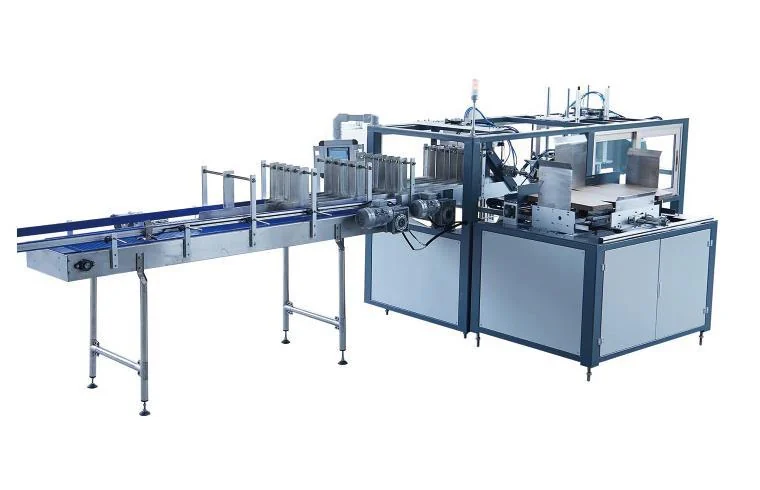
Define bottles per pack before comparing counters
Keep the approved SKU, bottle/pack drawings, lane arrangement and packaging material lot. Record whether the observed unit is a bottle, group, cycle, pack or case. Two packs per cycle and one pack per cycle cannot use the same cycle count as a physical pack total without the agreed conversion.
Use an approved safe method to identify actual contents and link each sample to its upstream group. Weight or a sensor pulse alone is not proof of exact count unless the method is validated for bottle fill variation, pack tare and the real fault set. Quality must define completeness and product disposition.
Illustration only: a specified 12-bottle pack containing 11 is short, while 13 is overfilled for that specification. 8 wrong-count packs among 400 inspected packs equal 2%. These values are not measured performance or an allowed defect rate; separate missing and extra cases in the record.
Locate the first count disagreement
Compare stable running and stop/restart from outside guards. Keep actual contents, machine counter and inspection decision as three different records rather than assuming they are equivalent.
| Pattern | Evidence | Review boundary |
|---|---|---|
| Group is already short before packing | Identified infeed group, lane gaps and first event | Supply/group formation and permitted synchronization review |
| Correct group becomes short after transfer | Linked before/after group and safe transfer observations | Handoff or handling loss, not nominal pattern alone |
| Actual count correct but inspector rejects | Reference count, approved recipe and inspection/reject record | Presentation, configured task and inspection challenge |
| Aggregate counter differs but sampled packs are complete | Counter unit, reset window, rework and rejected-pack ledger | Counting basis and reconciliation, not automatically a mechanical fault |
Repeat the same count challenge
Never add or remove bottles inside an operating packer, bypass guards, disable a missing-bottle function or alter sensor logic from this article. Qualified personnel must apply the actual OEM isolation and test procedures. Do not release suspect packs because a counter total later balances.
- 01
Retain the approved count/pattern, original recipes and identified good/suspect groups. Agree physical-reference and inspection challenge methods.
- 02
Compare matched infeed, post-transfer and finished-pack samples at stable run and restart. Record initiating events separately from affected pack totals.
- 03
Have qualified personnel review the first failed boundary and authorize one permitted correction, preserving before/after settings and parts.
- 04
Retest the same SKU, material and observation window. Safely challenge any supplied completeness detection and rejection, including the agreed fault samples.
- 05
Quality reviews count, pack integrity, rejected-product segregation and rework reconciliation together before connected acceptance.
Specify grouping, transfer or inspection work
A short group at infeed points to a different scope from a bottle lost during packing. A false rejection is different again. Adding a higher-capacity packer or increasing line speed does not by itself identify or cure the first count mismatch.
Send Allot Tech the approved pack unit, linked sample evidence and actual counter basis. Request written boundaries for grouping/transfer, format parts, inspection/rejection if supplied, controls responsibility, rework handling and connected acceptance. Do not assume a catalog packer includes a particular completeness sensor.
- Machine identities, approved bottle count and pack pattern
- Bottle/pack drawings, lane arrangement and material lots
- Linked samples before grouping, after transfer and at discharge
- Counter units, reset window, rework and reject reconciliation
- Stable/restart observations and approved inspection challenges
- Quality disposition and proposed mechanical/control/inspection responsibility
Questions buyers ask
Can pack weight alone prove no bottle is missing?
Not without a validated method for the actual fill variation, packaging tare and required fault cases. Keep an independent physical-count reference and quality-approved challenge; weight is not automatically equivalent to completeness.
If the line counter matches the order, are all packs complete?
No. First confirm what the counter counts and how rejects, rework and resets are handled. An aggregate total can agree while individual packs have the wrong contents.
Related troubleshooting guides
Water filling machine low output
Water filling machine low output →Water bottle shrink-pack problems
Water bottle shrink-pack problems →Cap leaks after capping
Cap leaks after capping →Wrinkled or skewed bottle labels
Wrinkled or skewed bottle labels →Uneven fill levels and underfill
Uneven fill levels and underfill →Conveyor jams and tipping
Conveyor jams and tipping →Missing or unreadable date codes
Missing or unreadable date codes →Wet bottles after drying
Wet bottles after drying →Startup rejects after changeover
Startup rejects after changeover →Ask Allot Tech to review the evidence
Send your machine identification, package drawing and timed observations. State what is unknown so the proposed scope follows the actual problem.