
Bottled water production: solve one problem
Bottle Rinser Missing Rinse Jets: Trace the Nozzle and Bottle Opportunity
A missing visible jet, a jet that misses the bottle opening and an alarm about a jet are three different observations. The rinse medium and installed process may also differ between machines. A wet bottle exit or a normal common-header gauge does not prove that every intended bottle received its approved treatment.
Use approved safe observation or installed monitoring to link each expected treatment opportunity to its nozzle, bottle position and operating phase. Keep bottle presentation, medium availability, actual delivery and monitoring separate. Quality decides the affected-product hold and required process evidence; a visible spray is not cleaning validation.
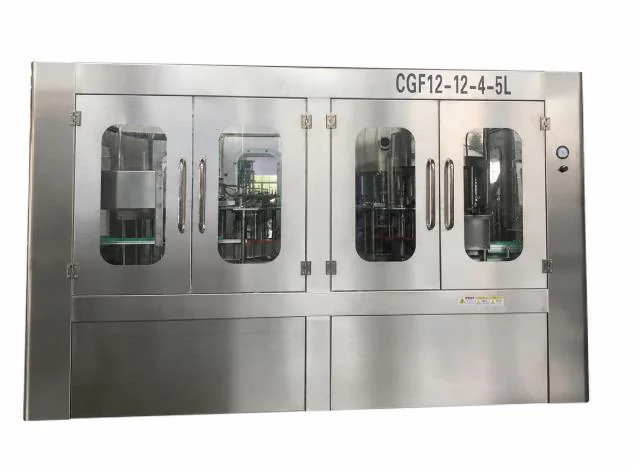
Count expected treatment opportunities on the installed process
Identify the rinser serial, approved bottle and neck revision, actual medium route, nozzle/station identities and any installed monitoring. Preserve the approved process and service records. Do not replace water, air or a specified treatment medium with another substance because it appears in a different manufacturer’s category description.
Define when a jet is expected, how delivery can be observed safely and which bottle position is linked. Distinguish no bottle, bottle presented incorrectly, absent delivery and a monitor-only disagreement. Record startup, steady running, stop/restart and authorized cleaning return separately. A pooled shift count can conceal a station-specific interruption.
Illustration: 8 missing observed jets among 400 comparable expected treatment opportunities equal 2%. The denominator is expected opportunities, not litres, nozzle count or bottles seen elsewhere. An obscured observation must be marked unknown, not automatically good. The example is neither an acceptable miss rate nor proof of treatment efficacy.
Separate medium supply from local delivery and presentation
Preserve the time link between installed utility readings, nozzle identity and the actual bottle. A common signal and a physical jet should not be treated as interchangeable evidence.
| Observed pattern | Evidence | Review boundary |
|---|---|---|
| Missing delivery repeats at one station | Station identity, expected opportunity and safe observation | Local delivery/actuation path under authorized service |
| Several stations change at the same recorded time | Synchronized approved utility records and line phase | Shared supply and installed distribution interface |
| Jet exists but does not enter the correctly identified bottle | Bottle/neck revision and first presentation discrepancy | Gripper, inversion and format presentation boundary |
| Monitor fails while independent approved observation differs | Same opportunity, monitor state and physical evidence | Monitoring coverage and quality-defined uncertainty |
Requalify the treatment boundary after authorized work
Never put a hand, tool or container into a running rinser, open a pressurized path or clear a nozzle while energized. Qualified personnel isolate stored energy and follow the approved chemical/hygiene procedures.
- 01
Preserve station/time records and hold affected output according to quality instructions.
- 02
Agree safe observation, expected treatment opportunities and the independent process evidence required after service.
- 03
After isolation, have the responsible specialist authorize one correction to the earliest failed interface.
- 04
Repeat the same stations, bottle format, approved medium and phases, including the restart that exposed the miss.
- 05
Quality reviews both delivery evidence and the separately required treatment qualification before release; restored spray alone is insufficient.
Quote the real treatment and monitoring scope
A local missing jet, inadequate shared supply, a bottle presentation fault and uncertain monitoring require different work. A new rinser cannot compensate for an unqualified treatment process by being described as more powerful. A gauge reading does not specify coverage inside every bottle.
Send Allot Tech the actual treatment route, bottle drawings, installed station/format details and the linked records. Ask which supply interfaces, nozzle family, grippers, monitoring and acceptance activities are included or retained. List unknown treatment requirements for the process owner rather than selecting a generic chemical or pressure.
Record who owns medium quality, process validation, utilities, machine service and product disposition. Keep the representative catalog machine’s large-format context separate from the format under review. A successful isolated station check is not evidence for every cavity, restart or production condition.
- Machine serial and station/nozzle identities
- Approved bottle/neck and installed format parts
- Actual approved medium and treatment route
- Expected, missed and unknown opportunity ledger
- Time-linked supply and monitoring observations
- Process, utility, service and quality responsibilities
Questions buyers ask
Does visible spraying prove bottles are adequately treated?
No. It demonstrates only the observed delivery condition. Quality and the process owner define treatment qualification and the disposition of affected output.
Can a normal header reading rule out a missed nozzle jet?
No. Link the shared reading to the same time and station, and use the approved delivery observation. A common measurement does not establish every individual opportunity.
Related troubleshooting guides
Water filling machine low output
Water filling machine low output →Water bottle shrink-pack problems
Water bottle shrink-pack problems →Cap leaks after capping
Cap leaks after capping →Wrinkled or skewed bottle labels
Wrinkled or skewed bottle labels →Uneven fill levels and underfill
Uneven fill levels and underfill →Conveyor jams and tipping
Conveyor jams and tipping →Missing or unreadable date codes
Missing or unreadable date codes →Wet bottles after drying
Wet bottles after drying →Startup rejects after changeover
Startup rejects after changeover →Missing or extra bottles in packs
Missing or extra bottles in packs →Cap feeder jams and missing caps
Cap feeder jams and missing caps →PET bottle scuffing and scratches
PET bottle scuffing and scratches →Label web breaks and torn liners
Label web breaks and torn liners →Cartons reopening after sealing
Cartons reopening after sealing →PET bottle bases rocking after blowing
PET bottle bases rocking after blowing →Filling valves dripping between bottles
Filling valves dripping between bottles →Reject signal without physical bottle removal
Reject signal without physical bottle removal →Water pallet loads leaning after stacking
Water pallet loads leaning after stacking →Bottle sidewalls pulling inward after capping
Bottle sidewalls pulling inward after capping →Crooked or cross-threaded bottle caps
Crooked or cross-threaded bottle caps →Sleeve cutting drifts against the printed artwork
Sleeve cutting drifts against the printed artwork →Air pressure drops at the PET blow molder
Air pressure drops at the PET blow molder →Ask Allot Tech to review the evidence
Send your machine identification, package drawing and timed observations. State what is unknown so the proposed scope follows the actual problem.