
Bottled water production: solve one problem
Bottle Reject Signal but No Physical Rejection: Reconcile the Same Bottle
A reject counter increment does not prove the intended bottle left the line. Inspection can identify a bottle correctly while tracking, handoff, removal or confirmation fails later. Conversely, an unlinked bottle in a reject bin cannot establish which decision caused its removal.
Use an authorized, contained quality challenge that links a uniquely identified sample to decision, tracked position, physical removal and confirmation. Separate detection, removal and ledger reconciliation. Suspect product stays under the site quality procedure; do not lower thresholds or disable rejection to keep running.
Give every challenge bottle an accountable destination
Identify inspector and rejector serials, approved job revision, actual bottle, conveyor route, tracking handoffs and confirmation scope. Quality must select controlled, safely identifiable challenge material and its segregation procedure. Do not introduce an unapproved contaminant, damaged package or unsafe object into production to create a test.
Use a common event basis to connect the same identified sample at inspection, the reject decision, the removal point and the verified destination. Record neighboring bottles and queue transitions where the approved method permits. Decisions, actuation requests, physical bottles and bin counts must not be treated as interchangeable units.
Illustration only: of 20 identified challenge bottles commanded for rejection, 19 are confirmed removed and 1 is not. The unreconciled removal fraction is 5%. This is not an allowed escape rate, an inspection sensitivity or Allot Tech performance. Stop and hold according to the approved challenge procedure rather than accepting the average.
Locate the first broken identity link
Retain decisions and actual destinations from the same contained run. A last alarm or a full reject bin is not enough to prove whether the wrong bottle was tracked, removal failed or the confirmation record disagreed.
| Observed mismatch | Evidence | Review boundary |
|---|---|---|
| The intended sample never receives its expected decision | Authorized reference, job revision and matched inspection record | Detection/job review, not demonstrated removal failure |
| A decision is linked to a different downstream bottle | Identities, intervening transfers and agreed event alignment | Tracking and retained conveyor/controls handoff |
| The correct sample reaches removal but stays on the line | Linked removal request, safe physical observation and final destination | Serial-specific removal mechanism and permitted service |
| Physical removal is confirmed but the ledger disagrees | Same sample destination, confirmation event and count window | Verification or record basis, not automatically a missed removal |
Keep the challenge contained and authorized
No actuator timing, force, sensor threshold or tracking-program setting is prescribed. Qualified personnel follow isolation and OEM procedures. Never catch bottles by hand, defeat guards, bypass verification or send challenge material into saleable output.
- 01
Quality authorizes the sample set, containment, stop/hold rules, original job and method before any challenge.
- 02
Document every sample identity and expected outcome; verify segregation and destination accountability.
- 03
After isolation where required, review the first broken link and approve one permitted correction with the responsible specialist.
- 04
Repeat the same linked challenge through agreed spacing, queue and restart cases, retaining each actual outcome.
- 05
Reconcile all samples and the released/held product boundary before quality accepts the connected inspection and removal scope.
Buy verified removal scope, not just another camera
A detection gap, wrong-bottle association, failed removal and a reporting mismatch require different work. A new camera cannot automatically qualify a retained conveyor or rejector. The acceptance record must connect an agreed challenge to the same bottle and its accountable destination.
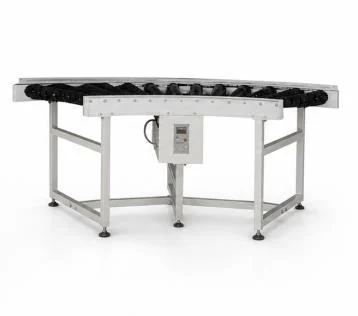
Ask Allot Tech to identify inspection coverage, tracking limits, retained equipment, removal hardware, verification if included, alarm/hold behavior and connected acceptance in writing. The conveyor photograph proves none of those optional functions. Keep unresolved dependencies and third-party responsibilities explicit.
Define which supplier owns identity across each transfer and who verifies failure cases under the site quality procedure. Successful normal production or one visible reject does not establish challenge coverage, all formats or detection performance. Preserve the approved test protocol and actual records instead of converting a counter total into a safety claim.
- Inspector, rejector and conveyor identities/layout
- Approved job and actual bottle revisions
- Quality-authorized contained challenge and expected outcomes
- Decision, tracking, removal and confirmation records
- Spacing, queue, stop/restart and retained interfaces
- Sample accountability, product holds and acceptance owners
Questions buyers ask
Can a reject counter prove the defective bottle left the line?
No. Link the same identified sample to physical removal and confirmation. Detection, actuation and aggregate counts are separate evidence.
Should detection thresholds be relaxed when good bottles are rejected?
Not as an unapproved workaround. Quality and qualified specialists must distinguish reference, detection, tracking and removal errors using the approved contained challenge.
Related troubleshooting guides
Water filling machine low output
Water filling machine low output →Water bottle shrink-pack problems
Water bottle shrink-pack problems →Cap leaks after capping
Cap leaks after capping →Wrinkled or skewed bottle labels
Wrinkled or skewed bottle labels →Uneven fill levels and underfill
Uneven fill levels and underfill →Conveyor jams and tipping
Conveyor jams and tipping →Missing or unreadable date codes
Missing or unreadable date codes →Wet bottles after drying
Wet bottles after drying →Startup rejects after changeover
Startup rejects after changeover →Missing or extra bottles in packs
Missing or extra bottles in packs →Cap feeder jams and missing caps
Cap feeder jams and missing caps →PET bottle scuffing and scratches
PET bottle scuffing and scratches →Label web breaks and torn liners
Label web breaks and torn liners →Cartons reopening after sealing
Cartons reopening after sealing →PET bottle bases rocking after blowing
PET bottle bases rocking after blowing →Filling valves dripping between bottles
Filling valves dripping between bottles →Water pallet loads leaning after stacking
Water pallet loads leaning after stacking →Ask Allot Tech to review the evidence
Send your machine identification, package drawing and timed observations. State what is unknown so the proposed scope follows the actual problem.