
Bottled water production: solve one problem
PET Bottle Scuffing and Scratches: Locate the First New Contact Mark
White rubbing bands and isolated scratches can share a transfer route without sharing a cause. Some marks arrive with the bottle; others appear at one guide or increase while bottles accumulate. A photograph of the finished bottle cannot locate the first damaging interface.
Use identified bottles and a repeatable surface-zone reference before and after each suspected contact. Separate incoming marks, new fixed-height marks and marks associated with bottle-to-bottle contact or restart. Quality must evaluate integrity concerns separately from cosmetic appearance.
Give a scuff a surface address and a counting unit
Keep the approved bottle drawing, lot, wall construction and empty/filled state. Mark the observation zone on a separate sketch, not by contaminating a production surface. Use comparable lighting, viewing direction and inspection timing. A different bottle orientation can hide a mark that was already present.
Record incoming appearance before the first suspect conveyor, then matched observations at transfer, guiding, accumulation and discharge. Distinguish a continuous rubbing band from an isolated scratch or a suspected crack. Cosmetic classification is not a leak, strength or product-safety assessment; follow the site's quality procedure for those questions.
Illustration: 15 bottles with the defined mark among 500 inspected bottles equal 3%. Count each bottle once for that classification, even if it carries several marks. Record mark severity and locations separately. This is not an acceptable scuff rate, a measured factory result or a conveyor efficiency.
Find the first change in the same surface zone
Observe from outside protections at stable flow and agreed accumulation/restart conditions. A later alarm or reject point is not necessarily where a surface first contacted a guide, another bottle or trapped material.
| Pattern | Matched evidence | Review boundary |
|---|---|---|
| Marks already present before the suspected section | Incoming samples, lot and surface-zone photographs | Upstream or incoming-bottle condition, not assumed conveyor origin |
| New mark appears at the same height after one contact | Before/after samples, contact location and installed guide identities | Local presentation and guide/transfer compatibility |
| Marks increase during accumulation or restart | Comparable dwell, bottle state, orientation and contact observations | Bottle-to-bottle and accumulated-flow interfaces |
| Only one bottle revision develops the mark | Approved drawings, actual samples and retained format parts | Format-specific contact evidence, not proof every bottle is compatible |
Retest appearance without unsafe live adjustments
Do not polish moving rails, add unapproved lubricant, remove guards or reach between bottles to inspect a mark. Qualified personnel must follow isolation, hygiene and OEM procedures. A suspected sharp defect or loss of integrity requires quality control, not concealment with a surface treatment.
- 01
Preserve the original configuration, bottle lot, surface references and incoming samples before any permitted change.
- 02
Agree cosmetic classification and separate integrity escalation; fix lighting, inspection timing and operating phases.
- 03
After safe isolation, have qualified personnel review one suspected contact boundary and approve one permitted correction.
- 04
Repeat the same before/after observations through stable running, agreed accumulation and restart; retain adverse samples.
- 05
Review appearance together with transfer stability, cleanliness and quality disposition before accepting connected handling.
Quote the contact interface rather than more conveyor length
A fixed-height new mark suggests a different investigation from inherited incoming damage or marks that develop during accumulation. Adding conveyor length or slowing a single machine is not evidence that the relevant contact has been corrected. Keep the first changed surface zone tied to the proposed work.
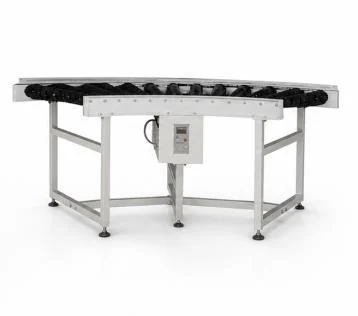
Ask Allot Tech to state retained/replaced guides, transfers, contact materials if confirmed, bottle formats, hygiene requirements and agreed operating cases. Acceptance should use actual approved bottles and matched observations; a catalog conveyor image cannot certify a particular surface, material or abrasion result.
If a bottle revision changes its contact diameter or local stiffness, keep that revision explicit in the handover. A successful trial on the previous bottle is not evidence for a newly lightweighted or differently shaped package. Record unknown geometry as a review item, not an assumed equivalent.
- Bottle drawings, revisions, lots and actual empty/filled samples
- Machine and contact-point layout with identities
- Incoming and successive surface-zone photographs
- Installed guide/transfer parts and retained interfaces
- Stable, accumulation, dwell and restart observations
- Cosmetic criteria, integrity escalation and acceptance responsibilities
Questions buyers ask
Can a white mark prove the bottle is leaking or structurally weak?
No. Appearance alone does not establish integrity. Segregate suspect product and use the quality-approved integrity assessment while keeping cosmetic scuff diagnosis separate.
Does a slower conveyor always prevent scuffing?
No. First identify where a new mark appears and under which contact and accumulation conditions. Any permitted change needs matched retesting and a check that other transfer problems were not introduced.
Related troubleshooting guides
Water filling machine low output
Water filling machine low output →Water bottle shrink-pack problems
Water bottle shrink-pack problems →Cap leaks after capping
Cap leaks after capping →Wrinkled or skewed bottle labels
Wrinkled or skewed bottle labels →Uneven fill levels and underfill
Uneven fill levels and underfill →Conveyor jams and tipping
Conveyor jams and tipping →Missing or unreadable date codes
Missing or unreadable date codes →Wet bottles after drying
Wet bottles after drying →Startup rejects after changeover
Startup rejects after changeover →Missing or extra bottles in packs
Missing or extra bottles in packs →Cap feeder jams and missing caps
Cap feeder jams and missing caps →Label web breaks and torn liners
Label web breaks and torn liners →Cartons reopening after sealing
Cartons reopening after sealing →Ask Allot Tech to review the evidence
Send your machine identification, package drawing and timed observations. State what is unknown so the proposed scope follows the actual problem.