
Bottled water production: solve one problem
Shrink Sleeve Cut Registration Drift: Compare Artwork, Cut and Application
Artwork ending too close to a cut edge is not automatically a sleeve slipping on the bottle. The printed repeat, detection reference, actual cut and final application position are separate boundaries. Heat shrink appearance can obscure where the first displacement occurred, so retain approved unshrunk samples.
Link reel and artwork revision to samples before cutting, immediately after the safely accessible cutting stage and after application/shrinking. Use the approved print datum and signed offset method. Do not alter a blade, sensor, feed or tunnel setting until the first changed relationship is established.
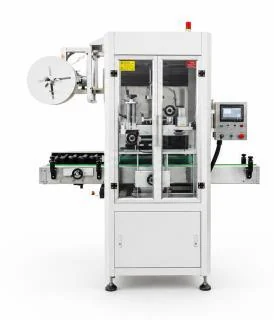
Give the cut error a print datum and a reel identity
Retain approved artwork, sleeve/film specification, reel lot, nominal printed repeat and the installed detection route. Some routes use a dedicated registration mark and others use approved artwork features; identify the actual method rather than assuming every machine scans the same mark. Preserve accepted reference sleeves and rejected material with orientation intact.
Agree where the cut is compared to the print datum, which direction is positive and how the material is supported during measurement. Record actual repeat, cut-to-datum offset and cut sleeve length separately. Retain start, steady-run, splice and restart evidence. Never force an offset value into a tolerance copied from another machine or film family.
Illustration: 12 sleeves outside the project-approved registration assessment among 800 inspected cut sleeves equal 1.5%. Count sleeves, not individual print marks or repeated measurements of one piece. Keep the observed offset distribution and reel location as separate evidence. The example gives no universal allowable deviation or Allot Tech output claim.
Locate the first changed print-to-cut relationship
Compare linked material before shrinking so later visual distortion does not hide an earlier cut error. A correct cut with wrong bottle placement belongs to a different task.
| Pattern | Evidence retained | Review scope |
|---|---|---|
| Printed repeat or reference changes on incoming material | Approved artwork and oriented samples from the identified reel | Material/printing specification and lot review |
| Incoming repeat is consistent but cut-to-datum shifts | Linked cut samples, detection route and line phase | Serial-specific detection, feed and cutting interface |
| Error first appears at a splice or restart | Reel/splice identity and ordered before/after specimens | Approved joining/restart transition, not universal heat adjustment |
| Cut relationship passes but applied/shrunk image moves | Same cut sample basis and application checkpoints | Placement or shrinking task rather than proven registration failure |
Retest the approved reel without blade or sensor recipes
Keep hands away from cutters, mandrels, hot tunnels and moving web. Qualified personnel isolate energy and follow OEM procedures. Do not defeat mark detection or rejection to make the trial appear successful.
- 01
Preserve oriented before/after material, original readings, reel identity and approved artwork.
- 02
Agree print datum, signed measurement, sample phases and material disposition with quality and the film supplier.
- 03
Authorize one correction at the earliest failed boundary after qualified isolation and inspection.
- 04
Repeat the same repeat/cut/placement comparisons, including the relevant splice and restart.
- 05
Review registration and separately required application, readability and finished-label acceptance before release.
Send both uncut material and actual cut sleeves
A print-repeat issue, an unstable print-to-cut relationship and a correct cut applied at the wrong height are not interchangeable machine-upgrade scopes. More tunnel heat cannot demonstrate correction of an error that already exists in an unshrunk cut sample.
Send Allot Tech approved artwork and material specifications with oriented incoming, cut and applied samples. Identify the existing detection route, reel joining, cutter, application and tunnel interfaces without assuming which options are supplied. Ask the supplier to confirm processability of every proposed artwork/material revision on the actual configuration.
Define who owns printed material acceptance, machine correction, inspection and connected release. If reel length or repeat differs between tests, preserve that difference instead of presenting the defect percentage as a direct improvement. A short trial on one approved print does not qualify all colours, materials or splice constructions.
- Approved artwork and print-datum definition
- Film/sleeve revisions, reel lots and orientation
- Incoming, cut and applied sample sequence
- Repeat, sleeve length and signed offsets
- Detection route and splice/restart records
- Material, service and quality acceptance scope
Questions buyers ask
Should tunnel heat be changed when the cut crosses artwork?
Not from that symptom alone. Check the unshrunk print-to-cut relationship first; tunnel adjustment cannot establish why an upstream cut is displaced.
Does one accepted printed design qualify another reel artwork?
No. Confirm the actual reference-detection method and approved material/artwork requirements. Retain a separate qualified test basis for the changed design.
Related troubleshooting guides
Water filling machine low output
Water filling machine low output →Water bottle shrink-pack problems
Water bottle shrink-pack problems →Cap leaks after capping
Cap leaks after capping →Wrinkled or skewed bottle labels
Wrinkled or skewed bottle labels →Uneven fill levels and underfill
Uneven fill levels and underfill →Conveyor jams and tipping
Conveyor jams and tipping →Missing or unreadable date codes
Missing or unreadable date codes →Wet bottles after drying
Wet bottles after drying →Startup rejects after changeover
Startup rejects after changeover →Missing or extra bottles in packs
Missing or extra bottles in packs →Cap feeder jams and missing caps
Cap feeder jams and missing caps →PET bottle scuffing and scratches
PET bottle scuffing and scratches →Label web breaks and torn liners
Label web breaks and torn liners →Cartons reopening after sealing
Cartons reopening after sealing →PET bottle bases rocking after blowing
PET bottle bases rocking after blowing →Filling valves dripping between bottles
Filling valves dripping between bottles →Reject signal without physical bottle removal
Reject signal without physical bottle removal →Water pallet loads leaning after stacking
Water pallet loads leaning after stacking →Bottle sidewalls pulling inward after capping
Bottle sidewalls pulling inward after capping →Crooked or cross-threaded bottle caps
Crooked or cross-threaded bottle caps →Missing or intermittent bottle-rinser jets
Missing or intermittent bottle-rinser jets →Air pressure drops at the PET blow molder
Air pressure drops at the PET blow molder →Ask Allot Tech to review the evidence
Send your machine identification, package drawing and timed observations. State what is unknown so the proposed scope follows the actual problem.