
Secondary packaging · pack-definition control
Define the Sellable Pack Before Selecting the Packer
A packer cannot be selected responsibly from bottles per minute alone. The sellable unit includes the bottle arrangement, film or carton, support material, print, handle, tunnel result and discharge orientation.
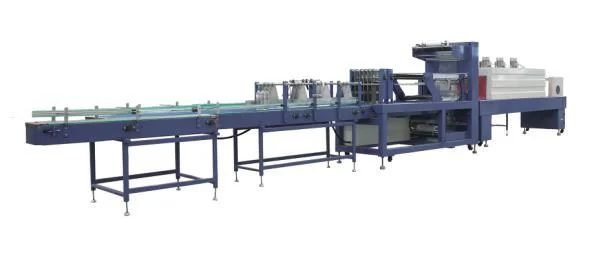
Solve the production problem before buying more machinery
Use a measured symptom and a controlled retest to decide whether the next action is material correction, maintenance, interface work or a machine change.
Loose film, tearing or skewed bottle packs?
Find the first defective stage, control the bottle-and-film format and compare cooled packs before and after a documented change.
Water bottle shrink-pack problemsDIRECT ANSWER
What the buyer should decide
Specify bottle count, row arrangement and travel direction before selecting film and a packer. Convert the bottle target to packs per minute for each SKU, then confirm film, tray or pad, finished-pack dimensions, stability and the next conveyor. A 3 × 4 pack is not a film-size specification.
| Decision field | Confirm | Why it changes the purchase |
|---|---|---|
| Pack pattern | Bottle count, rows and orientation | Controls collation and lanes |
| Material | Film, tray, pad, carton and print | Controls feed and sealing |
| Finished pack | Dimensions, appearance, code and discharge | Controls tunnel and downstream transfer |
BUYER DECISION WORKBENCH
Seven catalog patterns on the same illustrative bottle-rate basis
The pattern list comes from the hot-shrink-film reference on page 32 of the Allot Tech 2026 catalog. The figures below are our arithmetic for an illustrative steady 10,000 bottles/hour entering packing, not catalog packer speeds. Required packs/min = bottles/hour ÷ bottles/pack ÷ 60.
| Pattern | Bottles/pack | Packs/min at illustrative 10,000 BPH |
|---|---|---|
| 2 × 3 | 6 | 27.78 |
| 3 × 3 | 9 | 18.52 |
| 3 × 4 | 12 | 13.89 |
| 3 × 5 | 15 | 11.11 |
| 3 × 6 | 18 | 9.26 |
| 4 × 5 | 20 | 8.33 |
| 4 × 6 | 24 | 6.94 |
Rounded to two decimals for comparison, not a procurement ceiling. For example, a strict 10,000 BPH requirement in 24-packs needs 6.9444... packs/min; rounding down to 6.94 loses a little nominal capacity. Actual selection must additionally establish sustainable output, losses, lanes, replenishment and changeovers without double-counting allowances. Not every catalog bottle size is confirmed for every pattern.
BUYER DECISION WORKBENCH
The same bottle count can need a different infeed and film setup
A 3 × 4 group and a 4 × 3 group both contain twelve bottles, but their leading edge and travel direction can differ. Mark the direction of travel on the pack drawing instead of sending only a bottle count. Do not calculate a film cutting length from bottle diameter alone.
| Release item | Provide to the packer supplier |
|---|---|
| Physical pack | Bottle drawing, filled mass, row arrangement, travel arrow and target finished-pack dimensions. |
| Film | Material construction, thickness, reel/core dimensions, winding direction and printed registration if used; an actual trial roll. |
| Tray or pad | Controlled blank drawing and board sample, forming/adhesive scope where applicable, plus replenishment method. |
| Finished output | Code visibility, handle if selected, discharge orientation and samples for the following conveyor/pallet route. |
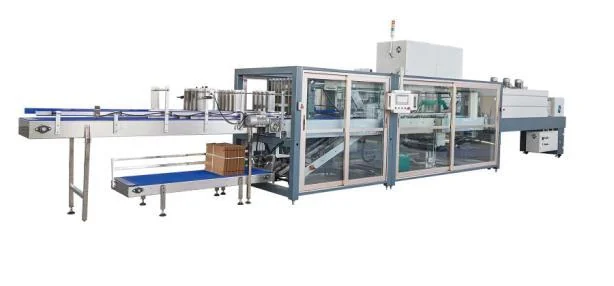
REQUIRED INPUTS
Prepare the evidence before selection
Missing fields should remain marked as open rather than converted into assumptions.
- Bottle and pack matrix
- Film or carton specification
- Tray/pad requirement
- Printed-mark and code location
- Finished-pack acceptance samples
- Palletizer or manual handling interface
TRADE-OFFS
Make the choice visible
Every option changes the machinery, operating work or project boundary.
Material reduction
Can lower consumption while reducing stiffness or tunnel tolerance.
More pack formats
Increases market flexibility and changeover complexity.
Automatic collation
Reduces labor but depends on stable infeed and format control.
PURCHASING RISKS
Do not let these gaps hide in the quotation
Carry every unresolved item into clarification and contract documents.
- Quoting without a pack drawing
- Using sample film different from production
- Ignoring pack orientation after discharge
- Leaving tunnel appearance subjective
WORK SEQUENCE
Move from data to a controlled next action
- 01
Approve the pack matrix.
- 02
Confirm packaging materials.
- 03
Define collation and discharge.
- 04
Set visible acceptance criteria.
- 05
Test every priority pack at FAT.
BUYER QUESTIONS
Answers to common bottled-water machinery searches
Use these answers to prepare the next supplier question; final configuration remains project-specific.
What information does a bottle packing machine supplier need?
Provide bottle count, row pattern, film or carton construction, tray or pad, finished-pack dimensions, code position, discharge direction and palletizing handoff.
Why is a pack drawing more useful than bottles per minute?
The sellable pack controls collation, film or carton feed, tunnel behavior, discharge orientation and downstream transfer—not just infeed speed.
Technical descriptions are selection guidance. Final machine, capacity, material, component, interface, utility and service details must be confirmed in the project proposal.
Content reviewed:
NEXT PURCHASING ACTION
Control every sellable pack format.
Send pack drawings, materials, samples and the downstream handoff.