
Decoration intent · downstream interface control
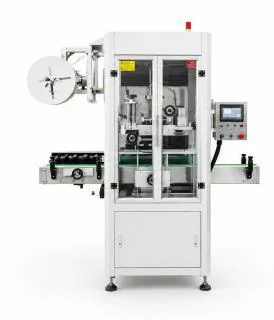
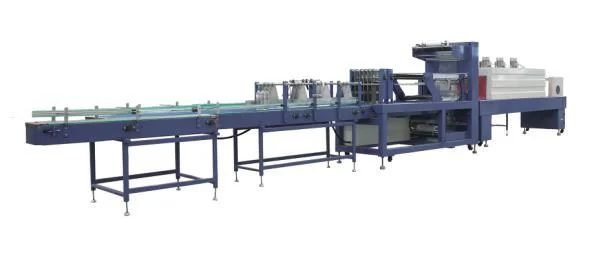
Integrate Labeling, Coding and Conveyors as One Bottle-Handling Stage
A labeler, coder and conveyor can each run alone while failing as a connected stage. Bottle stability, surface moisture, artwork registration, code position, sensor view and line-speed signals must agree.
Solve the production problem before buying more machinery
Use a measured symptom and a controlled retest to decide whether the next action is material correction, maintenance, interface work or a machine change.
Wrinkled, skewed or lifting bottle labels?
Separate sleeve, OPP and self-adhesive routes. Locate the first visible defect and retest the approved bottle and label before changing the machine.
Wrinkled or skewed bottle labelsDIRECT ANSWER
What the buyer should decide
Connect the stages around actual bottle presentation: surface condition, spacing, orientation, code location, inspection and the packer infeed. A conveyor speed in metres per minute is not a bottle output until pitch and lane count are defined. Record the handoff between each pair of machines.
| Decision field | Confirm | Why it changes the purchase |
|---|---|---|
| Bottle state | Filled mass, condensation, surface and stability | Controls handling and label adhesion |
| Decoration | Label technology, artwork registration and code | Controls applicators and sensors |
| Line interface | Conveyor speed, accumulation, interlocks and rejects | Controls connected output |
BUYER DECISION WORKBENCH
Convert pitch into conveyor speed, then verify the whole handoff
For an ideal single-lane, evenly spaced stream, conveyor speed in m/min = bottles/hour × centre-to-centre pitch in mm ÷ 60,000. Illustrative example: 12,000 bottles/hour at 100 mm pitch requires 20 m/min. At 150 mm pitch it requires 30 m/min for the same bottle rate. This is kinematics, not a coder or conveyor performance rating.
| Handoff | Agree before connecting machines | Evidence to keep |
|---|---|---|
| Filler to labeling | Bottle temperature/moisture, drying if needed, spacing and stability | Bottle-condition samples and the transfer arrangement. |
| Labeler to coder | Actual code surface/location, centre-to-centre pitch and label/seam clearance | Marked samples at the intended presentation and message format. |
| Coder to inspection | Code presence versus correct-content verification, trigger and product tracking | Defined inspection scope, challenge samples and response. |
| Inspection to packing | Reject confirmation, accepted bottle stream, lane entry and blocked/starved behavior | An agreed boundary test and named owner of each signal. |
The formula excludes gaps, slip, accumulation and changing lane arrangements. It does not establish marking time, print quality, reject timing or a safe operating speed. A catalog coder speed in m/min cannot be converted to guaranteed bottle output without those conditions.
REQUIRED INPUTS
Prepare the evidence before selection
Missing fields should remain marked as open rather than converted into assumptions.
- Bottle and label drawings
- Approved label material
- Code content and location
- Bottle surface condition
- Required effective output
- Conveyor elevation and direction
- Inspection and reject rules
TRADE-OFFS
Make the choice visible
Every option changes the machinery, operating work or project boundary.
More accumulation
Buffers short stops while increasing bottle pressure and footprint.
Integrated inspection
Adds defect evidence and reject logic with more validation work.
Flexible coding
Supports multiple markets but requires controlled recipes and artwork clearance.
PURCHASING RISKS
Do not let these gaps hide in the quotation
Carry every unresolved item into clarification and contract documents.
- Ignoring condensation at label application
- Placing the code where sensors or packs hide it
- Using conveyor speed as machine output
- Leaving reject-bin capacity and response undefined
WORK SEQUENCE
Move from data to a controlled next action
- 01
Freeze bottle, label and code data.
- 02
Map every transfer and accumulation zone.
- 03
Confirm sensors and registration.
- 04
Define interlocks and rejects.
- 05
Test the connected stage at representative conditions.
BUYER QUESTIONS
Answers to common bottled-water machinery searches
Use these answers to prepare the next supplier question; final configuration remains project-specific.
Why should labeling, coding and conveyors be selected together?
They share the same bottle state, line speed, sensor space, transfer stability, interlocks and reject handling.
What causes labeler problems after a water filler?
Common risks include condensation, unstable bottles, uncontrolled artwork registration, unsuitable label material and poor accumulation or transfer geometry.
Representative machinery views
Compare the machinery form before selecting the project scope
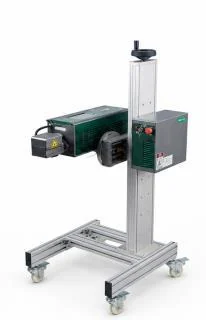
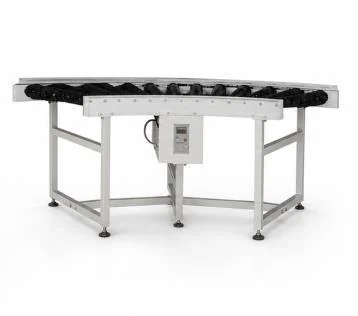
Technical descriptions are selection guidance. Final machine, capacity, material, component, interface, utility and service details must be confirmed in the project proposal.
Content reviewed:
NEXT PURCHASING ACTION
Send the complete decoration stage.
Attach bottle, label, code, conveyor and reject data for an interface review.