
Core machine intent · rinse-fill-cap selection
Select a 3-in-1 Water Filling Machine from the Complete Interface
A 3-in-1 monoblock combines rinsing, filling and capping, but it does not define the complete water bottling line. The correct configuration depends on the treated water, bottle, neck, cap, fill requirement, hygiene boundary and connected equipment.
DIRECT ANSWER
What the buyer should decide
Issue one controlled data set for the bottle, neck and cap. Ask the supplier to state the output basis, rinse path, filling principle, cap feeding and application, product-contact materials, cleaning access, change parts and upstream or downstream signals.
| Decision field | Confirm | Why it changes the purchase |
|---|---|---|
| Rinsing | Bottle support, rinse medium, drainage and sanitation | Controls pre-fill hygiene and bottle handling |
| Filling | Water condition, fill basis, valve configuration and bottle behavior | Controls product-contact selection |
| Capping | Cap sort, delivery, application and verification | Controls closure compatibility |
BUYER DECISION WORKBENCH
Read a 3-in-1 quotation as three machine zones plus auxiliaries
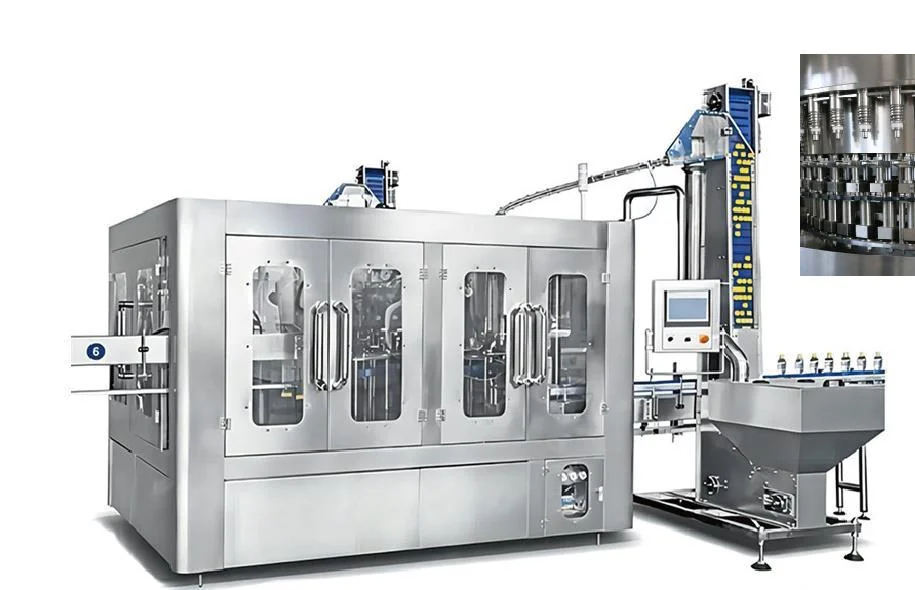
The monoblock image shows one connected machine frame, but a useful quotation still identifies what happens in each zone and which support equipment sits outside it. This prevents the phrase 3-in-1 from hiding cap feed, conveyors, inspection or water-delivery exclusions.
| Equipment block | Answer required in the offer | Typical boundary to keep visible |
|---|---|---|
| Bottle rinsing or preparation zone | Bottle support, rinse path, medium, contact time basis where applicable and drainage | Bottle source and infeed transfer remain upstream equipment. |
| Water filling zone | Filling principle, product-contact path, tank or supply boundary and fill acceptance method | Water treatment, treated-water storage and interconnecting product piping may be separate. |
| Closure application zone | Capper arrangement, approved cap and neck pair, application checks and format parts | Cap hopper, elevator, sorter, chute and cap treatment require explicit inclusion. |
| Infeed and discharge transfer | Elevation, direction, guides, connection pieces and starved or blocked signals | Long conveyors, accumulation and field installation are not implied by the monoblock name. |
| Inspection and rejection | Selected bottle, fill or cap checks and the response to a failed item | Inspection physics, reject device and reject confirmation need their own acceptance basis. |
- Match each included item to a controlled bottle, neck and cap revision.
- Request an itemized format-parts list rather than a statement that sizes are adjustable.
- Put upstream supply and downstream acceptance assumptions into the FAT record.
- Compare the 3-in-1 machine price only after external auxiliaries and site work are marked included, excluded or open.
The XGF and large-bottle catalog images are representative machinery examples. Model identity, number of stations, output, bottle range and availability remain subject to a project-specific offer.
BUYER DECISION WORKBENCH
Turn a bottle-size range into per-SKU acceptance data
A statement such as 500 mL to 1.5 L is not enough to release a machine order. Those example fill sizes can use different necks, bodies, caps and labels. Request a separate configuration and test row for every bottle that will actually run.
| Per-SKU field | Record in the proposal | Evidence before acceptance |
|---|---|---|
| Bottle and neck identity | Drawing revision, dimensions, material and production sample | The tested container matches the approved drawing and sample. |
| Closure identity | Cap drawing, neck match and cap-feed configuration | Approved closure samples run through feeding, application and agreed checks. |
| Filling and output basis | Water condition, fill acceptance method and required speed for this SKU | A stated test duration, count boundary, accepted output and recorded rejects. |
| Format change | Guides, stars, handling parts, filling/capping adjustments and recipes | An itemized included-parts list and a representative changeover demonstration. |
| Connection to the line | Infeed/discharge elevation, bottle presentation and blocked/starved response | The adjacent equipment and any simulated FAT conditions are identified. |
- Mark each SKU as demonstrated, subject to a planned test, or not included.
- Ask whether each format change needs tools, replacement parts or parameter changes; do not assume a universal tool-free conversion.
- Keep a model's station count separate from verified output for the actual bottle and water condition.
The bottle sizes above are examples of buyer inputs, not a claim that one catalog machine can process both. No capacity or format range is inferred from a photograph.
BUYER DECISION WORKBENCH
Keep the water-treatment system outside the monoblock assumption
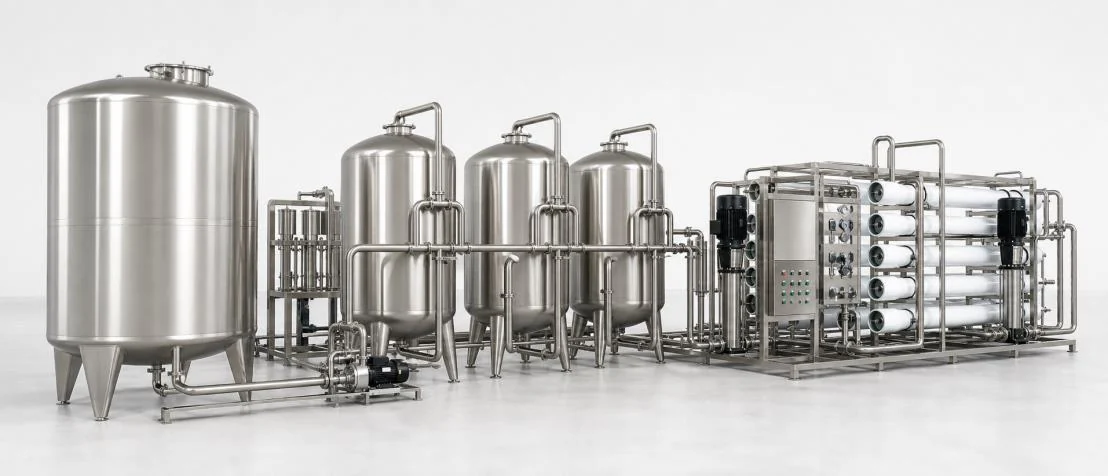
A rinse-fill-cap offer should say where treated water is delivered, what product piping and storage are included, and who supplies each utility. The connected frame does not make treatment, bottle blowing, labeling or final packing part of its price.
REQUIRED INPUTS
Prepare the evidence before selection
Missing fields should remain marked as open rather than converted into assumptions.
- Treated-water specification
- Bottle and neck drawings
- Cap drawing and samples
- Fill volume or level basis
- Output required for each bottle
- Cleaning expectation
- Upstream and downstream machine data
TRADE-OFFS
Make the choice visible
Every option changes the machinery, operating work or project boundary.
More valves
Can support a higher rating but also changes footprint, utilities and connected-machine requirements.
Wider bottle range
Adds change parts, recipes and production-representative testing.
More enclosed automation
Can strengthen control while adding access, sanitation and maintenance considerations.
PURCHASING RISKS
Do not let these gaps hide in the quotation
Carry every unresolved item into clarification and contract documents.
- Buying from valve count alone
- Using a generic bottle size instead of drawings
- Ignoring cap and neck pairing
- Testing without the approved bottle, cap and water basis
WORK SEQUENCE
Move from data to a controlled next action
- 01
Freeze the water and container basis.
- 02
Review each monoblock zone.
- 03
Confirm change parts and cleaning.
- 04
Map line signals and transfers.
- 05
Agree representative FAT criteria.
BUYER QUESTIONS
Answers to common bottled-water machinery searches
Use these answers to prepare the next supplier question; final configuration remains project-specific.
What does a 3-in-1 water filling machine do?
It combines bottle rinsing, water filling and cap application in one connected monoblock frame.
Is a 3-in-1 filler a complete water bottling line?
No. A complete line may also require treatment, bottle supply, cap handling, labeling, coding, inspection, packing, conveyors, controls and utilities.
Representative machinery views
Compare the machinery form before selecting the project scope
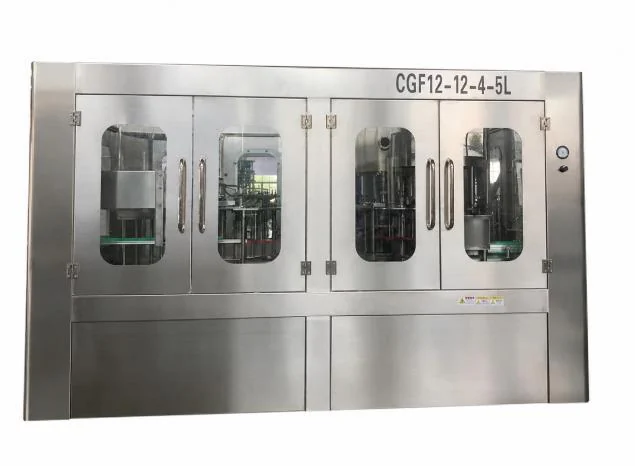
Technical descriptions are selection guidance. Final machine, capacity, material, component, interface, utility and service details must be confirmed in the project proposal.
Content reviewed:
NEXT PURCHASING ACTION
Quote the monoblock from controlled container data.
Send the bottle, neck, cap, water and output basis for a written configuration review.