
Sanitation intent · circuit and owner boundary
Define the CIP Boundary Before Selecting Cleaning Machinery
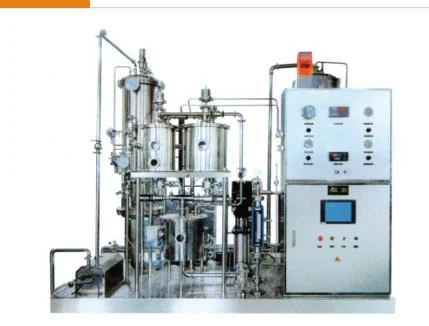
A CIP skid is not a universal cleaning answer. The required tanks, heating, dosing, routing, return, recovery, monitoring and documentation depend on the actual product-contact circuits and sanitation objective.
DIRECT ANSWER
What the buyer should decide
List every circuit and piece of equipment to be cleaned. Define the soil, cleaning sequence, chemical concentration basis, temperature, flow or velocity basis, contact time, drain or recovery path, verification method and manual work that remains.
| Decision field | Confirm | Why it changes the purchase |
|---|---|---|
| Cleaning circuit | Equipment, piping, valves, tanks and return path | Controls routing and skid size |
| Cleaning recipe | Water, chemical, temperature, time and flow basis | Controls tanks, dosing and heating |
| Verification | Conductivity, temperature, return condition and records | Controls release evidence |
REQUIRED INPUTS
Prepare the evidence before selection
Missing fields should remain marked as open rather than converted into assumptions.
- Product-contact flow diagram
- Equipment cleaning requirements
- Water and chemical availability
- Required cleaning recipes
- Drain and recovery arrangement
- Automation and record expectation
- Manual-cleaning boundaries
TRADE-OFFS
Make the choice visible
Every option changes the machinery, operating work or project boundary.
Central CIP
Can serve several circuits while adding routing, scheduling and cross-connection control.
Dedicated skid
Simplifies selected circuits but increases installed equipment.
More recovery
Can reduce water or chemical use while adding segregation and verification requirements.
PURCHASING RISKS
Do not let these gaps hide in the quotation
Carry every unresolved item into clarification and contract documents.
- Buying a CIP skid before defining circuits
- Assuming spray coverage without test evidence
- Leaving manual hoses and dead legs undocumented
- Treating temperature alone as cleaning proof
WORK SEQUENCE
Move from data to a controlled next action
- 01
Map every cleaning circuit.
- 02
Define the cleaning recipe basis.
- 03
Assign routing and owner scope.
- 04
Set monitoring and acceptance.
- 05
Verify circulation and records during testing.
BUYER QUESTIONS
Answers to common bottled-water machinery searches
Use these answers to prepare the next supplier question; final configuration remains project-specific.
Does every bottled water line need the same CIP system?
No. The cleaning scope depends on the product-contact circuits, sanitation target, utilities, automation and which work remains manual.
What should be confirmed before buying a CIP skid?
Confirm circuits, tank and piping volumes, cleaning recipes, chemicals, temperatures, flow basis, return paths, monitoring and acceptance evidence.
Technical descriptions are selection guidance. Final machine, capacity, material, component, interface, utility and service details must be confirmed in the project proposal.
Content reviewed:
NEXT PURCHASING ACTION
Turn the hygiene requirement into a circuit list.
Send the product-contact flow diagram and cleaning expectation for review.