
Machinery stage 02 · Bottle making
CORE WHEN BOTTLES ARE MADE IN-HOUSE
PET Bottle Blowing Machinery Matched to the Bottle and Filler
The blower is selected around the actual preform and approved bottle, not only a bottle-per-hour label. Bottle geometry, neck finish, mold concept, air system, cooling, transfer method, changeover range and the connected filler all affect the workable configuration.
Jump to quotation data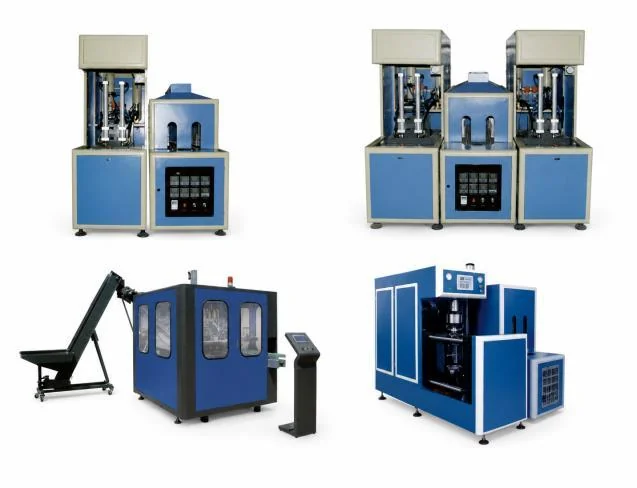
01 · QUICK ANSWER
What this machinery does and when it belongs
Bottle blowing machinery heats confirmed PET preforms and forms them in the approved mold. It is needed when the project will produce bottles in-house. A buyer purchasing finished empty bottles may omit the blower but still needs bottle receiving, storage and feeding equipment.
- Production stage
- Preform heating and bottle formation before empty-bottle transfer
- Selection status
- CORE WHEN BOTTLES ARE MADE IN-HOUSE
BUYER DECISION WORKBENCH
Release the bottle design and utility basis together
A blower proposal needs more than the bottle volume. Separate the approved preform and bottle design from the equipment that feeds, forms, cools and transfers it. Treat mold ownership, air quality and cooling connections as written scope items rather than assumed inclusions.
| Decision | Evidence needed | Purchase consequence |
|---|---|---|
| Bottle made in-house | Approved preform, neck and bottle revisions | Molds and handling parts follow the controlled design |
| Air and cooling supply | Supplier load schedule and site capability | Auxiliary equipment and connection work may be separate |
| Transfer to filler | Neck support, elevation, stop/restart and bottle state | The machine pair must work across the same format range |
Do not adopt another manufacturer's air, power or cavity-output figures for the proposed Allot Tech configuration. Confirm every value in the project documentation.
02 · WHERE IT FITS
Follow the actual upstream and downstream product state
Approved PET preforms, cap/neck standard, molds, high- and low-pressure air and cooling
PET Bottle Blowing Machinery
Stable empty bottles delivered online or offline to bottle handling and filling
03 · BUYER DATA REQUIRED
Do not request a responsible selection without these inputs
- Bottle drawing, sample and volume range
- Preform drawing, weight, material and neck finish
- Number of formats, mold ownership and changeover expectation
- Required connected-line output basis
- Available high-pressure and low-pressure air
- Cooling-water or chiller conditions
- Online transfer, silo or manual storage plan
- Factory height, access and maintenance envelope
04 · MACHINE FUNCTIONS
Describe the work, not a marketing adjective
- 01
Orient and feed the confirmed preforms.
- 02
Heat the preform profile for the approved bottle design.
- 03
Stretch and blow the preform in the matched mold.
- 04
Discharge bottles without unstable transfer or uncontrolled damage.
- 05
Coordinate production state and faults with downstream equipment where online transfer is used.
05 · MAIN CONFIGURATION OPTIONS
Choose an option only when its condition applies
PROJECT-SPECIFIC
Online or standalone
Online blowing reduces bottle handling but requires stronger line balance, controls and access coordination with the filler.
PROJECT-SPECIFIC
Format and mold strategy
One stable bottle differs from frequent multi-format production in mold, change parts, setup time and validation work.
PROJECT-SPECIFIC
Air and heat management
Compressor stages, air treatment, cooling and possible air recovery belong in the machinery scope discussion.
06 · COMPATIBILITY REQUIREMENTS
Eight interfaces must agree at the machine boundary
A supplier response should point to the controlling drawing, schedule or test for each row.
| Interface | Confirmation required | Evidence state |
|---|---|---|
| Mechanical | Preform feed, mold installation, discharge transfer, guards and maintenance access. | Confirm in drawing, schedule or test record |
| Container | Preform geometry, neck finish, bottle drawing, wall distribution and base stability. | Confirm in drawing, schedule or test record |
| Product | No water contact; bottle quality must remain suitable for rinsing, filling, labeling and packing. | Confirm in drawing, schedule or test record |
| Electrical | Voltage, frequency, connected load basis, heating controls and cabinet environment. | Confirm in drawing, schedule or test record |
| Control signal | Bottle demand, blocked/starved states, fault reset, permissives and emergency-stop boundaries. | Confirm in drawing, schedule or test record |
| Utility | High-pressure air, low-pressure air, treated cooling water or chiller service and ventilation. | Confirm in drawing, schedule or test record |
| Layout | Preform access, mold-handling path, compressor/chiller relationship and bottle-transfer route. | Confirm in drawing, schedule or test record |
| Operator | Preform loading, mold/change-part work, heating setup, bottle checks and safe fault recovery. | Confirm in drawing, schedule or test record |
07 · SELECTION TRADE-OFFS
Record what the buyer is prioritizing
Online transfer
Trade against independent storage flexibility; record the buyer priority and evidence.
Fewer format changes
Trade against broader bottle portfolio; record the buyer priority and evidence.
Compact footprint
Trade against mold-change and heater access; record the buyer priority and evidence.
Lower initial automation
Trade against labor, consistency and handling risk; record the buyer priority and evidence.
08 · COMMON QUOTATION OMISSIONS
Check what may sit outside the headline machine price
- Bottle and preform mold scope
- Preform elevator, hopper and conveying
- High-pressure compressor, air receiver, filters and dryer
- Chiller, cooling circuit and site pipework
- Bottle transfer or intermediate storage
- Approved bottle trial materials and change parts
09 · FAT INSPECTION POINTS
Trace the test back to approved project documents
- 01
Match machine, mold and preform identities to the approved documents.
- 02
Inspect guarding, mold access, heating control and emergency functions.
- 03
Run the agreed preform and bottle sample through startup and steady operation.
- 04
Check bottle appearance, dimensions and transfer stability using the agreed inspection method.
- 05
Record alarms, changeover items, manuals, mold files, spare parts and remaining site tests.
10 · MAINTENANCE AND SPARE PARTS
Prepare categories before shipment; confirm exact parts from the final configuration
- Stretch rods, seals and confirmed wear items
- Heater lamps and electrical switching spares
- Mold seals, cooling fittings and approved change parts
- Pneumatic valve and cylinder service items
- Preform-feed and transfer wear components
11 · NOT SUITABLE FOR
Reject the wrong application before discussing price
- A project buying finished bottles with no in-house blowing plan
- Unconfirmed bottle designs or mixed neck finishes treated as one format
- Sites without the confirmed compressed-air, cooling and power infrastructure
12 · INFORMATION NEEDED FOR QUOTATION
Send a machine-level request that can be answered
- Bottle and preform drawings
- Physical samples where available
- Format list and changeover plan
- Required line-output basis
- Online or standalone transfer choice
- Air, cooling and power conditions
- Factory layout and destination
Technical descriptions are selection guidance. Final machine, capacity, material, component, interface, utility and service details must be confirmed in the project proposal.
Content reviewed:
NEXT PURCHASING ACTION
Match this machinery to the whole connected line.
Send the project-specific buyer data, adjacent machine details and open interfaces.