
Machinery stage 06 · Decoration and traceability
CORE OR MARKET-SPECIFIC
Water Bottle Labeling and Coding Machines: Options and Selection
Choose the label applicator and variable-code unit as separate decisions. Sleeve, roll-fed OPP and self-adhesive systems handle different label constructions; the coder must suit the actual bottle, cap or label substrate. Start with the desired finished bottle, then compare machine scope and samples.
Jump to quotation data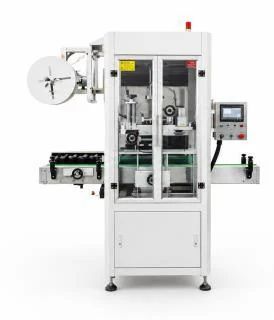
Solve the production problem before buying more machinery
Use a measured symptom and a controlled retest to decide whether the next action is material correction, maintenance, interface work or a machine change.
Wrinkled, skewed or lifting bottle labels?
Separate sleeve, OPP and self-adhesive routes. Locate the first visible defect and retest the approved bottle and label before changing the machine.
Wrinkled or skewed bottle labels01 · QUICK ANSWER
What this machinery does and when it belongs
A water bottle labeling package combines the selected applicator, bottle presentation and any required shrink or bonding stage. Date and lot coding, code verification, surface preparation and rejects must be itemized rather than assumed to come with the labeler.
- Production stage
- After filling and bottle-surface preparation, before final inspection and packing
- Selection status
- CORE OR MARKET-SPECIFIC
BUYER DECISION WORKBENCH
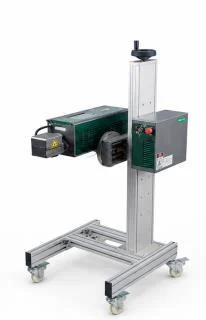
CO2 laser coder: read the reference data without mixing power and output
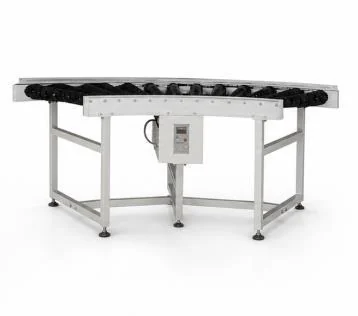
The Allot Tech 2026 catalog, page 31, shows an SXH sleeve labeler, a laser coder and a conveyor as separate equipment. The table below transcribes selected entries from the laser table only; it does not rate the sleeve labeler or promise current availability. A mark on your actual packaging material is the deciding evidence.
| Catalog field | Printed reference | What the project must establish |
|---|---|---|
| Laser type and wavelength | CO2 metal sealed laser; 10.6 µm / 9.3 µm (optional) | The exact laser and packaging substrate combination, verified with the proposed mark. |
| Laser power | 10 W / 30 W | Optical laser rating, not the total electrical demand or a bottles-per-hour rating. |
| Marking field | 70 × 70 mm; 110 × 110 mm (optional) | The selected optical arrangement and usable mark position on the curved or flat packaging surface. |
| Cooling | Air cooling | The model-specific installation environment and ventilation requirements. |
| Separate power entry | 1000 W | The catalog's separate electrical entry; confirm the exact supply and connected-load schedule for the offered unit. |
A sealed optical path is not proof of a complete guarded installation. Have the equipment supplier define enclosure, interlocks, extraction where needed and safe integration. No laser operating settings or universal material compatibility are specified here.
BUYER DECISION WORKBENCH
Ask for a finished-bottle sample record, not just a labeler speed
Use one record for each sellable bottle. A clean label on a dry demonstration bottle is not sufficient evidence for a cold bottle that reaches the machine with condensation, a different label construction or a different lot-code layout.
| Record | Keep with the sample | Acceptance question |
|---|---|---|
| Packaging identity | Bottle revision, cap, label or sleeve roll batch and artwork version | Was the exact intended packaging tested? |
| Application condition | Surface condition, bottle temperature, actual bottle rate and spacing | Does the sample represent the condition entering this line? |
| Finished decoration | Agreed position, seam/overlap, bond or shrink appearance and code location | Which visible defects are acceptable, rejected or still open? |
| Code and recovery | Approved data string, read method, restart sample and recipe-change sample | Is the correct information present after a stop or SKU change? |
- Confirm whether a sleeve tunnel, steam/heat service, dryer, coder and reject station are included or separately supplied.
- Keep a labeled reference sample and the conditions that produced it; do not generalize one trial to all formats.
BUYER DECISION WORKBENCH
Separate the label applicator, code unit and bottle-conditioning scope
A labeling quotation should identify the actual machine family and each auxiliary. The sleeve labeler and laser coder visible in the catalog are separate equipment examples; neither image confirms the label material, tunnel, code substrate, extraction or inspection required for a project.
| Purchase block | What the equipment does | Items that must be stated separately |
|---|---|---|
| Sleeve application | Cuts and places the approved sleeve on the controlled bottle position | Sleeve reel data, bottle spacing, shrink tunnel, heat or steam service, drainage and result inspection |
| Roll-fed OPP application | Cuts and wraps roll-fed film around a suitable bottle geometry | Film and registration data, adhesive system, temperature control, overlap and cleaning scope |
| Self-adhesive application | Dispenses a pressure-sensitive label from its liner onto an approved bottle panel | Number of labels, wipe-down arrangement, liner handling, orientation and surface condition |
| Variable coding | Marks the approved date, lot or traceability content on the selected substrate | Coding technology, code location, enclosure or extraction, recipe control and code verification |
| Bottle conditioning and transfer | Presents dry, spaced and stable bottles to the applicator and coder | Dryer if required, conveyor guides, metering, reject handling and connected-machine signals |
- Provide the bottle and label as physical samples as well as drawings.
- State bottle temperature and surface moisture at the labeling point.
- List every label and code combination by SKU rather than approving one generic format.
- Request a labeled and coded sample set made under the agreed line condition.
02 · WHERE IT FITS
Follow the actual upstream and downstream product state
Closed, stable bottles with an acceptable surface condition
Bottle Labeling and Coding Machinery
Labeled and coded bottles presented consistently to inspection or packing
03 · BUYER DATA REQUIRED
Do not request a responsible selection without these inputs
- Bottle drawings and samples for every format
- Label material, dimensions, artwork position and sample rolls
- Required code content, location and substrate
- Bottle surface condition and drying arrangement
- Output basis and format-change frequency
- Conveyor height, direction and bottle spacing
- Inspection, reject and market-language requirements
04 · MACHINE FUNCTIONS
Describe the work, not a marketing adjective
- 01
Control bottle spacing and orientation through the application point.
- 02
Apply the confirmed label material at the approved position.
- 03
Shrink, press or bond the label according to the selected method.
- 04
Print the agreed variable information on the selected substrate.
- 05
Exchange run, fault and reject states with the connected line.
05 · MAIN CONFIGURATION OPTIONS
Choose an option only when its condition applies
PROJECT-SPECIFIC
Sleeve labeling
Sleeve material, cut length, bottle geometry, shrink tunnel and steam or heat source must be confirmed together.
PROJECT-SPECIFIC
Self-adhesive labeling
Label backing, bottle panel, number of labels and orientation control determine the application arrangement.
PROJECT-SPECIFIC
Hot-melt roll-fed labeling and coding
Label film, adhesive, overlap, temperature control and the separate code substrate require project samples.
06 · COMPATIBILITY REQUIREMENTS
Eight interfaces must agree at the machine boundary
A supplier response should point to the controlling drawing, schedule or test for each row.
| Interface | Confirmation required | Evidence state |
|---|---|---|
| Mechanical | Conveyor height, bottle spacing, orientation devices, tunnel connections and discharge transfer. | Confirm in drawing, schedule or test record |
| Container | Bottle diameter, height, panel shape, rigidity, surface moisture and stability. | Confirm in drawing, schedule or test record |
| Product | Filled-bottle temperature and surface condition that affect label and code application. | Confirm in drawing, schedule or test record |
| Electrical | Voltage, heater or steam-generator loads where applicable, and cabinet environment. | Confirm in drawing, schedule or test record |
| Control signal | Run permissive, blocked/starved state, code-ready, label-low, fault and reject confirmation. | Confirm in drawing, schedule or test record |
| Utility | Power, compressed air, steam or heat where selected, adhesive and coding consumables. | Confirm in drawing, schedule or test record |
| Layout | Operator access, roll change, tunnel exhaust, code inspection and reject path. | Confirm in drawing, schedule or test record |
| Operator | Label loading, format setup, cleaning, code entry, verification and consumable change. | Confirm in drawing, schedule or test record |
07 · SELECTION TRADE-OFFS
Record what the buyer is prioritizing
One flexible label method
Trade against dedicated high-repeatability formats; record the buyer priority and evidence.
Manual adjustment
Trade against recipe and change-part control; record the buyer priority and evidence.
Compact tunnel arrangement
Trade against drying and maintenance access; record the buyer priority and evidence.
Integrated coder
Trade against independent code-placement flexibility; record the buyer priority and evidence.
08 · COMMON QUOTATION OMISSIONS
Check what may sit outside the headline machine price
- Bottle dryer before labeling
- Steam generator, heat tunnel or exhaust
- Label and coding consumables for trials
- Bottle orientation or spacing devices
- Code/label inspection and reject equipment
- Change parts and recipes for every bottle format
09 · FAT INSPECTION POINTS
Trace the test back to approved project documents
- 01
Approve bottle, label and code samples before the test.
- 02
Run each agreed format through startup, normal operation and stop/restart.
- 03
Inspect position, wrinkles, bond, shrink condition and code legibility using agreed criteria.
- 04
Verify alarms, low-consumable states, recipe access and reject signal.
- 05
Confirm change parts, settings records, documents, spares and remaining site trials.
10 · MAINTENANCE AND SPARE PARTS
Prepare categories before shipment; confirm exact parts from the final configuration
- Cutters, rollers, belts and application wear parts
- Sensors, encoders and bottle-spacing components
- Heater, steam or tunnel service items where used
- Coding filters, nozzles or other manufacturer-defined consumables
- Format guides and confirmed change parts
11 · NOT SUITABLE FOR
Reject the wrong application before discussing price
- Bottle and label formats that have not been physically evaluated
- Wet bottle surfaces where the selected adhesive or code requires dry application
- Market claims or regulatory label content that the buyer has not approved
12 · INFORMATION NEEDED FOR QUOTATION
Send a machine-level request that can be answered
- Bottle drawings and samples
- Label drawings and sample rolls
- Labeling method preference
- Code content and substrate
- Format list and output basis
- Surface drying and utilities
- Inspection, layout and consumable availability
Representative machinery views
Compare the machinery form before selecting the project scope
Technical descriptions are selection guidance. Final machine, capacity, material, component, interface, utility and service details must be confirmed in the project proposal.
Content reviewed:
NEXT PURCHASING ACTION
Match this machinery to the whole connected line.
Send the project-specific buyer data, adjacent machine details and open interfaces.