
Buyer scenario · Automation planning
Choose Low-Labor Automation by Task, Not by Label
Automatic machinery still needs operators for materials, changeovers, sanitation, inspections, faults and maintenance. A low-labor plan should name each present manual task, its frequency and risk, then select automation that removes or controls that task.
DIRECT ANSWER
What the buyer should decide
Map normal production and exception handling separately. Automated bottle supply, cap loading, label/film handling, inspection, case packing or pallet handling may reduce labor, while frequent formats or weak consumable control can add intervention elsewhere.
| Decision field | Confirm | Why it changes the purchase |
|---|---|---|
| Repetitive loading | Bottles, caps, labels, film, trays or cartons? | Identifies material-handling automation |
| Quality decision | Which defects require consistent automatic checks? | Identifies inspection and reject scope |
| Finished-pack handling | Manual lift, pallet pattern and dispatch method? | Identifies case/pallet automation boundary |
BUYER DECISION WORKBENCH
Buy automation for a named manual task
Low-labor operation comes from a sequence of specific equipment decisions. Select the task to remove or control, then confirm the new material, maintenance and fault-recovery work created by that machine.
| Manual task today | Machinery option to evaluate | Work that still needs an owner |
|---|---|---|
| Present empty bottles to the filler | Online blow-molder transfer or bulk-bottle feeding and unscrambling | Preform or bottle replenishment, format setup, cleaning and jam recovery |
| Lift and orient caps | Cap hopper, elevator, sorter and controlled chute feed | Bulk-cap supply, cleanliness, cap changeover and unsuitable-cap handling |
| Check bottle, fill, cap, label or code | Defined inspection sensors or vision plus reject handling | Challenge samples, threshold approval, reject review and bypass control |
| Form shrink packs or cases | Automatic collation with shrink wrapping, tray packing or case packing | Film or board replenishment, change parts, failed-pack recovery and consumable quality |
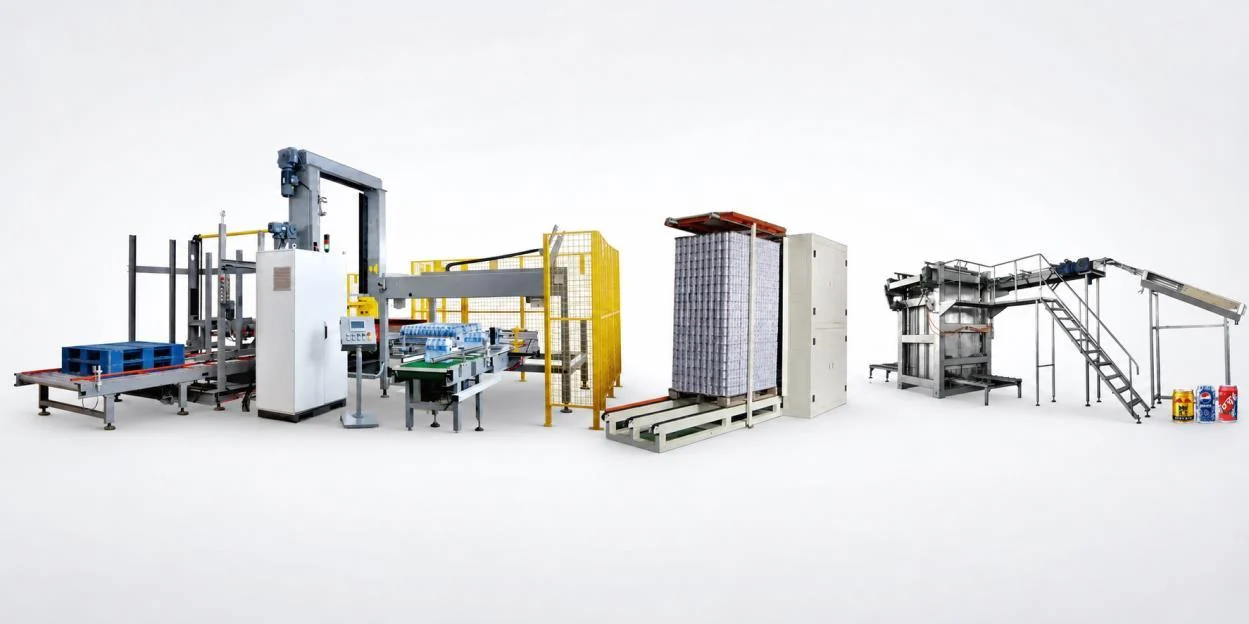
| Stack finished packs | Pack conveyor and palletizing system selected from the approved pack and pallet | Pallet supply, stretch wrapping if required, fault recovery and warehouse removal |
- Count operator tasks during normal running, replenishment, changeover and recovery.
- Separate reduced lifting or repetitive handling from headcount promises.
- Confirm safe access and restart ownership for every new automatic handoff.
- Reserve signals, elevation and space when automation will be phased.
The packing and palletizing catalog images on this page illustrate machine families. Labor requirement and output remain unconfirmed until the final arrangement and operating method are agreed.
REQUIRED INPUTS
Prepare the evidence before selection
Missing fields should remain marked as open rather than converted into assumptions.
- Current tasks and staffing
- Shift schedule
- Format and material-change frequency
- Required inspection points
- Maintenance capability
- Space, utilities and safety constraints
TRADE-OFFS
Make the choice visible
Every option changes the machinery, operating work or project boundary.
Lower direct labor
Adds sensors, controls, material-quality requirements and maintenance work.
Flexible manual work
Can suit short campaigns but needs staffing and repeatable instructions.
Integrated automation
Reduces handoffs only when controls and responsibilities are coordinated.
PURCHASING RISKS
Do not let these gaps hide in the quotation
Carry every unresolved item into clarification and contract documents.
- Counting operators but not maintenance skills
- Ignoring material replenishment and fault recovery
- Automating unstable bottles or packs
- Calling a line unmanned without evidence
WORK SEQUENCE
Move from data to a controlled next action
- 01
List every manual task.
- 02
Measure frequency and consequence.
- 03
Choose the automation boundary.
- 04
Define exception and recovery work.
- 05
Confirm spares, training and safety.
Representative machinery views
Compare the machinery form before selecting the project scope
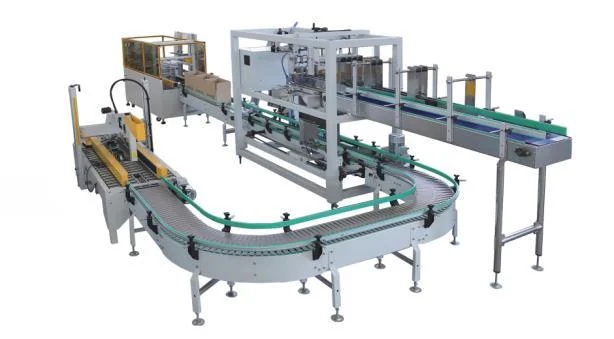
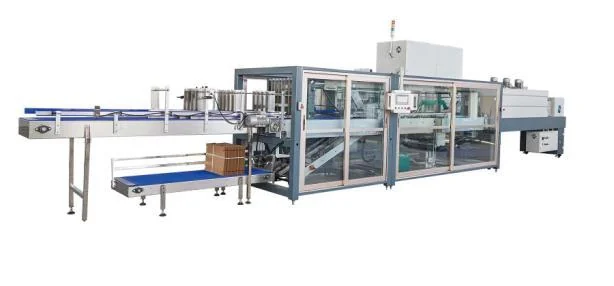
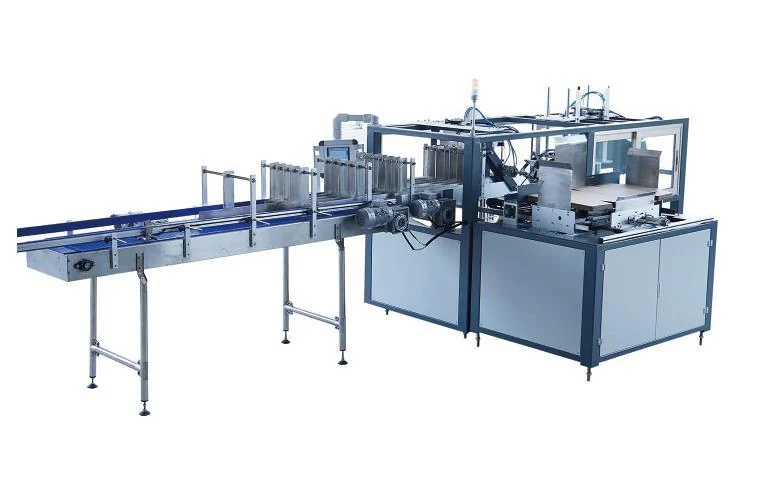
Technical descriptions are selection guidance. Final machine, capacity, material, component, interface, utility and service details must be confirmed in the project proposal.
Content reviewed:
NEXT PURCHASING ACTION
Define the labor task before the machine.
Send the shift plan, formats and manual operations you want to reduce.